
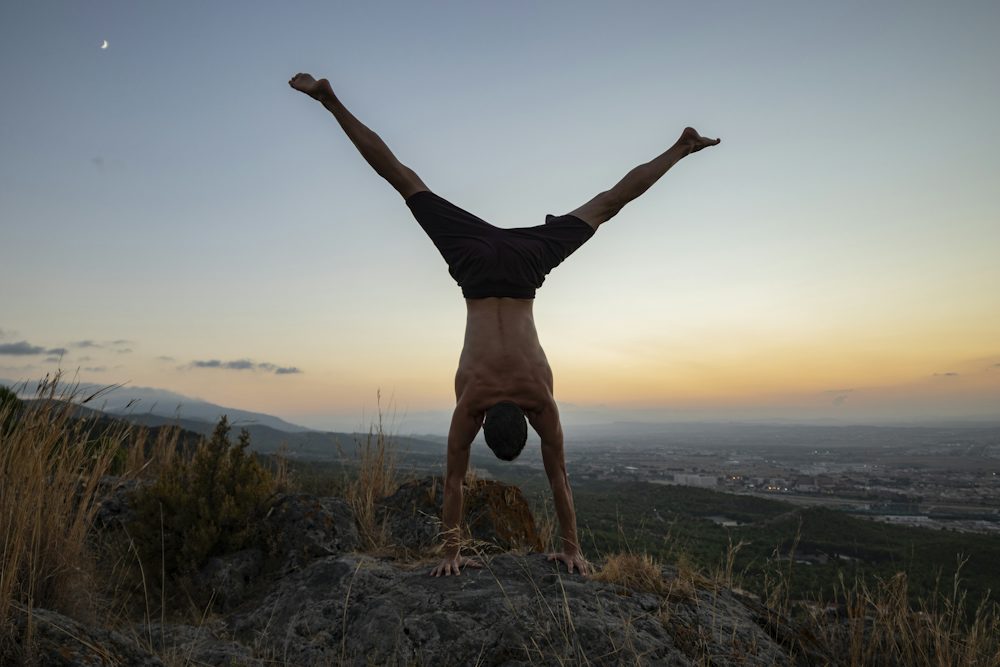
Walk into a gymnastics hall and a calisthenics park on the same day and you will see the same shapes: the planche, the levers, the handstand, the muscle-up. Then you notice that almost everything else is different.
- Core Takeaway: Real progress in calisthenics comes from strict full-range reps, tendon patience, and logging every session in ink.
- The Science in Plain English: Muscles adapt in weeks, while tendons need structured 3-week build blocks followed by a Week 4 recovery deload.
- Put It Into Practice: Follow the interactive 28-Day Bar Blueprint below on Monday, Wednesday, Friday, and Saturday.
One family tree
Both trace back to the same place. In the spring of 1811, Friedrich Ludwig Jahn opened an open-air training ground, a Turnplatz, on the Hasenheide in Berlin. He is credited with the parallel bars and with turning the horizontal bar into a training tool, and his movement, Turnen, spread across Europe. His bars are the ancestors of both the apparatus in a modern gymnastics hall and the steel in your local park.
Around the same time, the word calisthenics was coined from the Greek kállos, beauty, and sthénos, strength. For most of the twentieth century it meant school drills and military exercise. Gymnastics became an Olympic sport with a governing body and a rulebook. Calisthenics stayed outside, waiting for the streets to turn it into a sport of its own.
How each sport is judged
Artistic gymnastics is governed by the Fédération Internationale de Gymnastique and its Code of Points. Since 2006 the score has been open-ended: a difficulty score for what you attempt, added to an execution score out of ten for how cleanly you do it. Bent knees, flexed feet, an extra step on the landing: all deducted. Form is the language of the sport.
Calisthenics judging grew up from the community. Freestyle rewards power, flow, creativity and dynamics on a fixed bar. Statics rewards the holds, their difficulty and their line. Streetlifting removes the judges’ opinion altogether and asks one question: how much weight did you move? Style matters, and so does the way a set makes the crowd react.
The apparatus shapes the athlete
A gymnastics high bar flexes. Gymnasts wear grips, train over sprung floors and foam pits, and are spotted by coaches through every new skill. The bar stores energy and gives it back, which is how gymnasts generate their giant swings and big release moves.
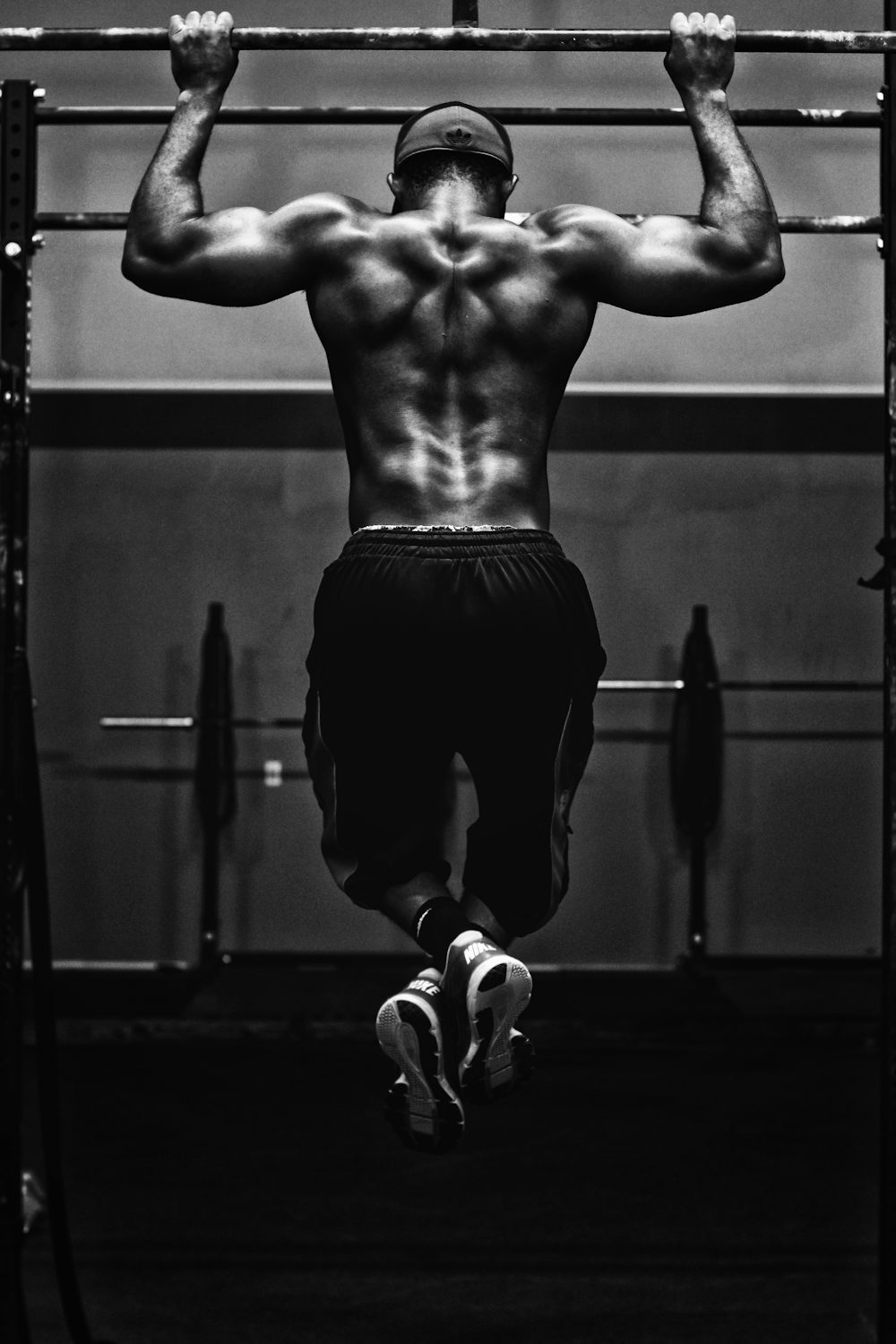
A street bar does not move. It is thicker, often weathered, sometimes wet, and it is set in concrete. Every rotation a freestyler throws comes from their own power, with no give in the bar to help. That is why calisthenics dynamics look different from a high-bar routine: tighter, more explosive, built on pulls and pushes rather than whipping swings.
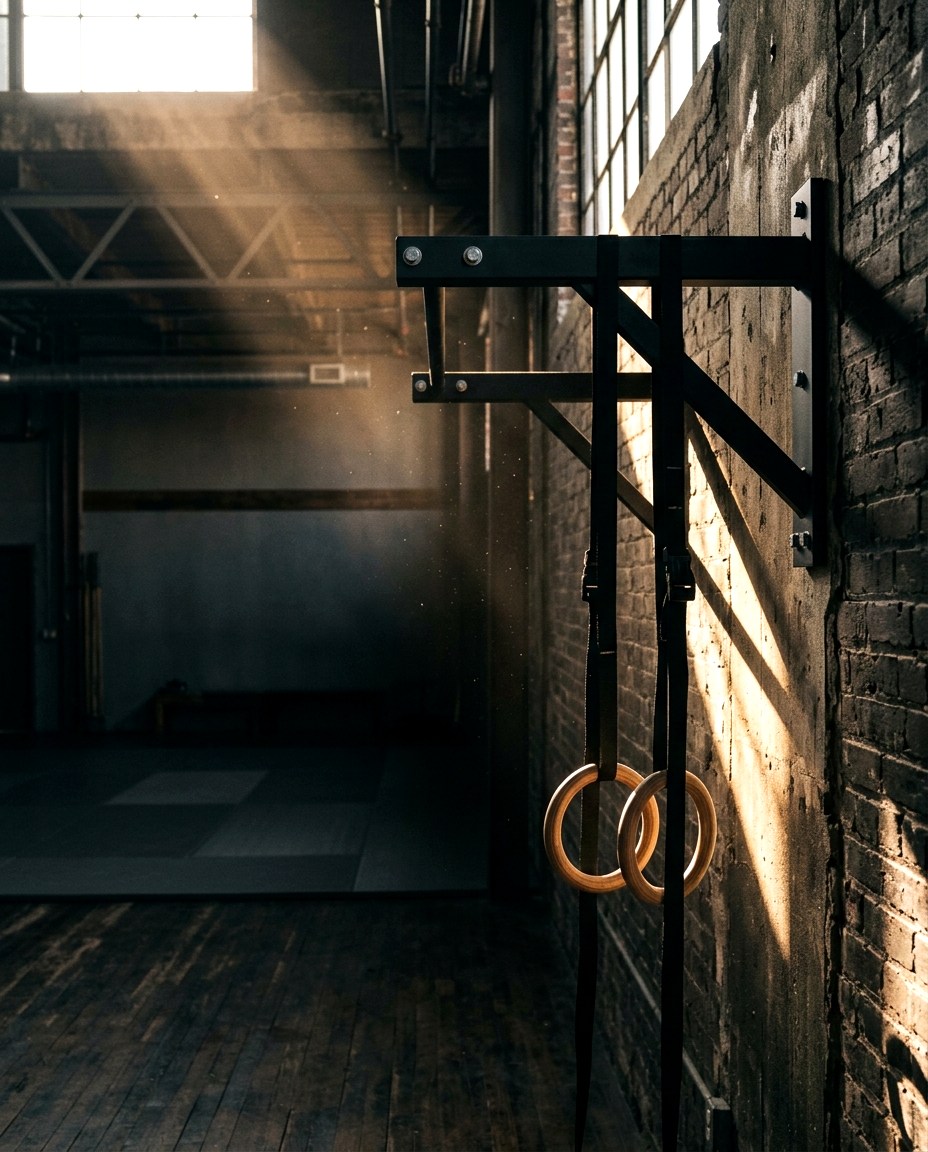
The same is true of the static holds. Gymnasts hold a cross or a maltese on rings that move under them; calisthenics athletes build the same straight-arm strength on bars, parallettes and the floor, where the fight is with leverage rather than with stability.
Who gets to start
Elite gymnastics is a childhood sport. The athletes on an Olympic floor have usually trained since they were small, in clubs, with coaches, for thousands of hours before they ever compete as seniors. Their bodies are shaped for the apparatus from the beginning.
Calisthenics has no such gate. Plenty of the strongest athletes in the sport started as adults, in a park, with a phone propped against a bench to film their sets. There is no age limit on a pull-up bar, and that openness is exactly why the sport exploded.
- Gymnastics — FIG Code of Points: difficulty plus execution out of ten; sprung apparatus, grips and coaches; usually started in childhood.
- Calisthenics — freestyle, statics, endurance and streetlifting; fixed bars and the floor; open to anyone who walks up to a bar.
- Shared skills — planche, front and back lever, handstand, maltese, muscle-up.
- Shared roots — Friedrich Ludwig Jahn’s training ground in Berlin, 1811.
What each can learn from the other
Calisthenics has borrowed heavily from gymnastics, and it should keep borrowing. Gymnasts are masters of straight-arm conditioning, of wrist and shoulder preparation, of mobility, and of breaking a skill into progressions that build it safely over years. Pointed toes and locked knees are not only for the judges either: a tight body is a lighter body to hold.
Gymnastics could take something back. Calisthenics proved that this kind of strength belongs to everyone, outside a club, outside childhood, in every city that has a bar. It turned the skills into a culture: filmed, shared, argued over, and passed from one athlete to the next for free.
Same shapes, different roads
Gymnastics is a road built for a few, paved by coaches and apparatus, and judged against a perfect form. Calisthenics is a road anyone can walk, with nothing but a bar and the ground, and judged by what you can do with your own body. Both end in the same place: complete control of yourself, in the air.
Spring steel vs. dead steel: the physics of apparatus compliance
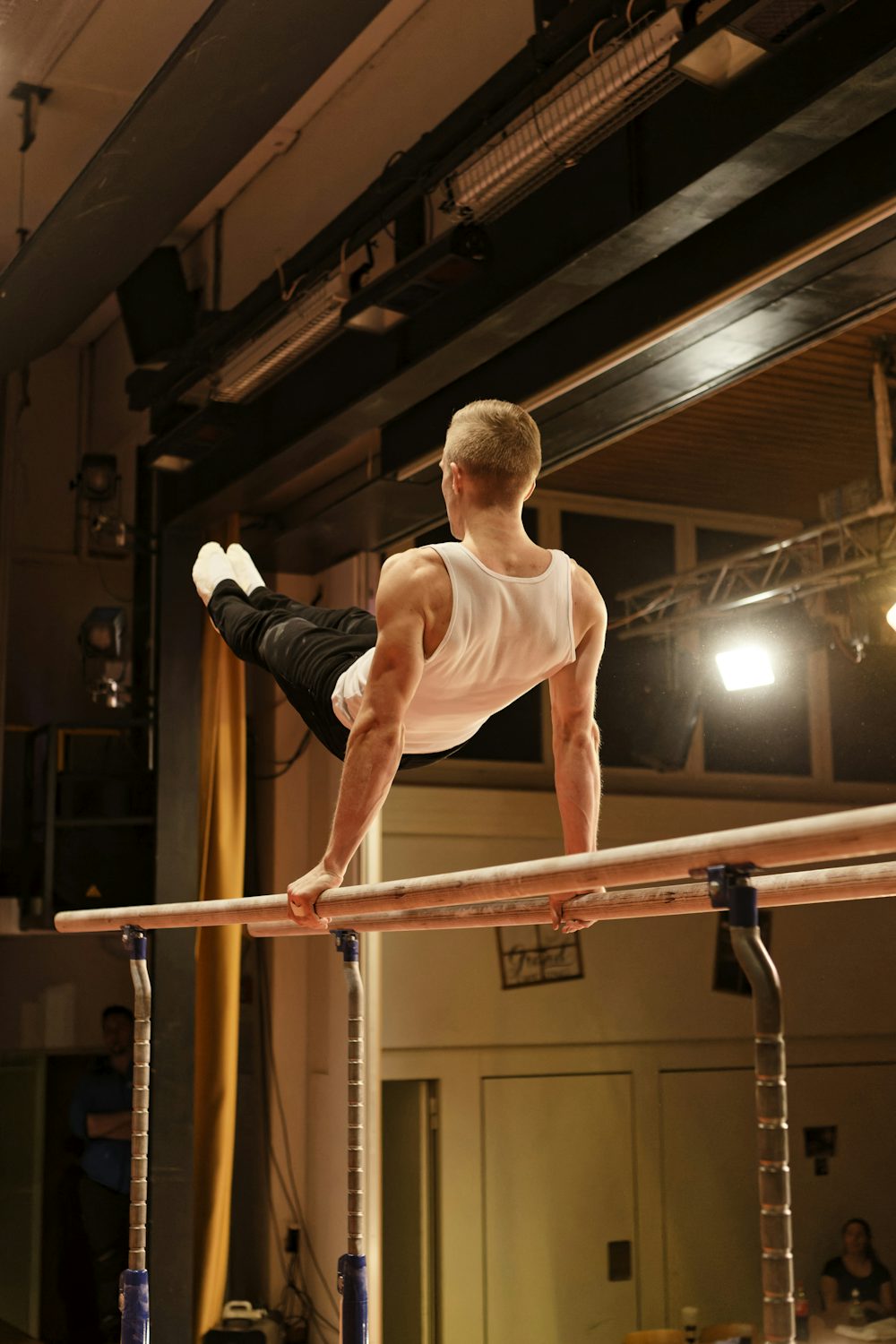
The deepest biomechanical difference between artistic gymnastics and street calisthenics is not the athlete—it is the elastic modulus of the steel they grip. Under the Fédération Internationale de Gymnastique (FIG) Apparatus Norms, a men’s competition horizontal bar is a precision-engineered spring-steel rail measuring exactly 28 mm in diameter, mounted 260 cm above the mat on tensioned steel cables that allow the bar to deflect by several centimetres under load. As a gymnast swings through the bottom of a giant, their kinetic energy is stored as elastic strain energy in the bending rail and returned at the release point like a catapult. Combined with dowel leather grips that lock the metacarpophalangeal joints to the bar, this spring return makes triple back somersault dismounts and Kovacs releases physically possible.
Walk up to a street workout bar in a public park and the physics change completely. Most outdoor bars are welded Schedule 40 galvanized steel pipes measuring 32 mm to 38 mm in diameter, concreted into rigid vertical posts with zero cable tension and zero elastic deflection. When a freestyle calisthenics athlete throws a 540 or a Geinger on a park bar, the steel gives nothing back—and when they catch the bar on the way down, their bare, chalked hands, wrists and shoulders must dissipate 100% of the impulse force. That is why street freestyle evolved tighter, more explosive pull-driven rotations rather than long, whipping giant swings.
The FIG Code of Points and the language of static difficulty
When calisthenics athletes argue about whether a full planche is harder than an iron cross or a maltese, gymnastics has already quantified the answer. In the FIG Men’s Artistic Gymnastics Code of Points, every static strength hold on Still Rings and Floor Exercise is assigned an official difficulty value from A (0.1 points) to I (0.9 points), and every hold must be maintained for a minimum of 2 full seconds before execution judges deduct 0.1, 0.3 or 0.5 points for angular deviations from horizontal:
The L-sit, straddle planche on floor, and back lever on rings sit at the entry tier of the FIG Code—what gymnastics considers basic preparatory conditioning, and what forms the intermediate core of park calisthenics.
The full planche on rings (C), iron cross (B), and inverted cross (C) require years of straight-arm biceps tendon and pectoralis minor conditioning to hold within 5 degrees of horizontal.
The Maltese cross (D/E), Victorian (E), and Zanetti/Balandin presses represent the outer boundary of human glenohumeral torque—skills now contested head-to-head on elite calisthenics stages.
Because elite gymnasts begin straight-arm loading before puberty while growth plates and collagen matrices are highly plastic, adult-onset calisthenics athletes must use slower, longer tendon-loading blocks to reach the same shapes safely.
The Park vs. Platform Reality Check: What Separates Real Progress From Ego
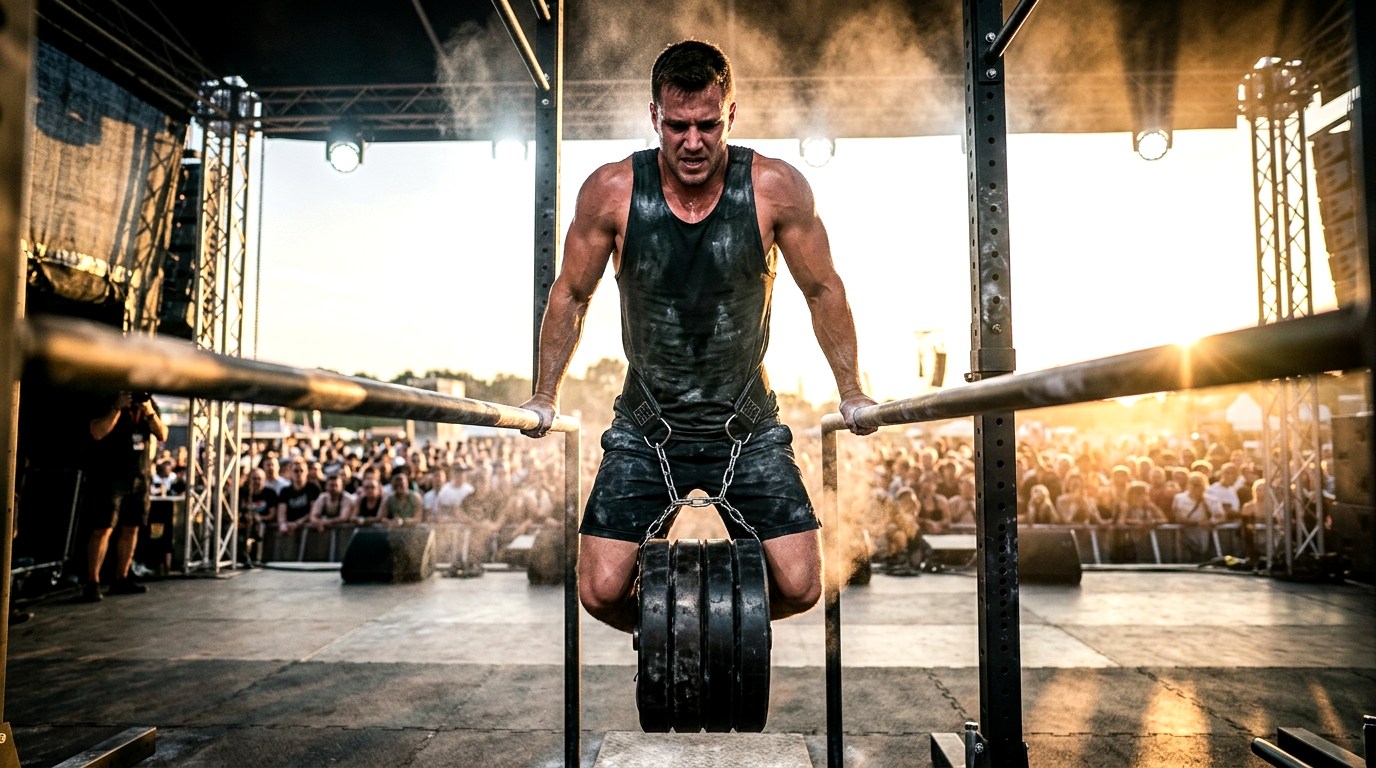
Ten-second social media clips only show the one lucky attempt filmed on fresh legs. Real calisthenics happens on a cold morning when nobody is watching, or on a competition platform when three referees are staring at your elbow lockout. Here is how the Anti Gravity Club standard compares to common park shortcuts in Calisthenics and Gymnastics: Same Roots, Different Roads:
| Training Habit | The Ego / Highlight-Reel Mistake | The Anti Gravity Club Standard | Result After 12 Months |
|---|---|---|---|
| Range of Motion | Stopping 2 inches short of a dead hang on pull-ups and cutting dips shallow | Dead stop at the bottom to chin/chest over bar; shoulder below elbow on every dip (ISF Rules v5.2) | Thicker muscle belly growth, bulletproof joints at full range, and competition-legal reps |
| Static Hold Quality | Holding a shaky 2-second progression with bent elbows and piked hips | Stacking 5–6 crisp sets of 6–8 seconds with locked triceps and squeezed glutes | Pain-free elbows and steady progression to straddle and full holds |
| Tracking Progress | Doing random circuits until tired with no record of reps, weights, or rest | Writing down Bodyweight + Belt Weight, sets, reps, and 3-minute rests in a logbook | Predictable strength gains every 4-week block with zero guesswork |
| Joint Recovery | Ignoring wrist or elbow tightness until an injury forces months off | 8-minute warm-up before every session and a lighter Week 4 deload every month | 52 unbroken weeks of training—the real secret behind elite calisthenics athletes |
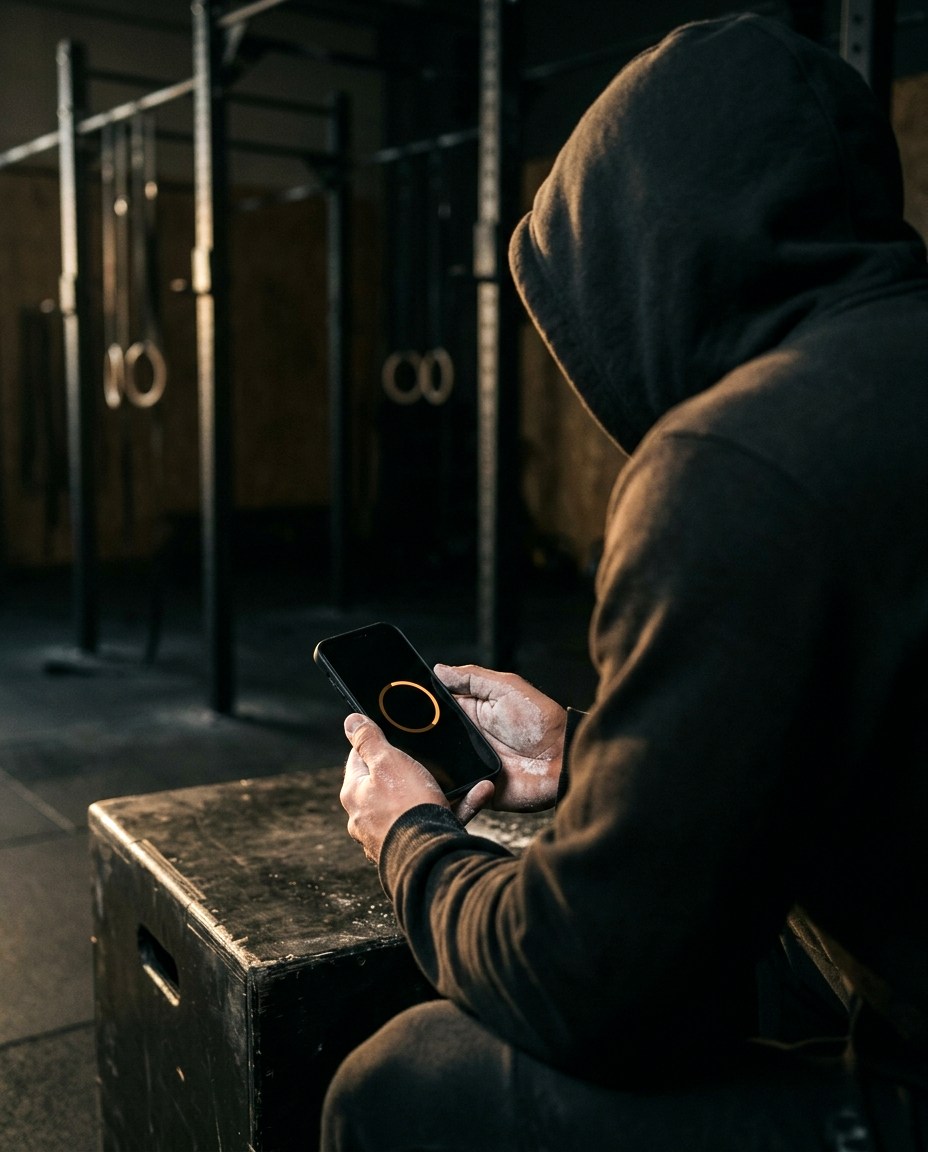
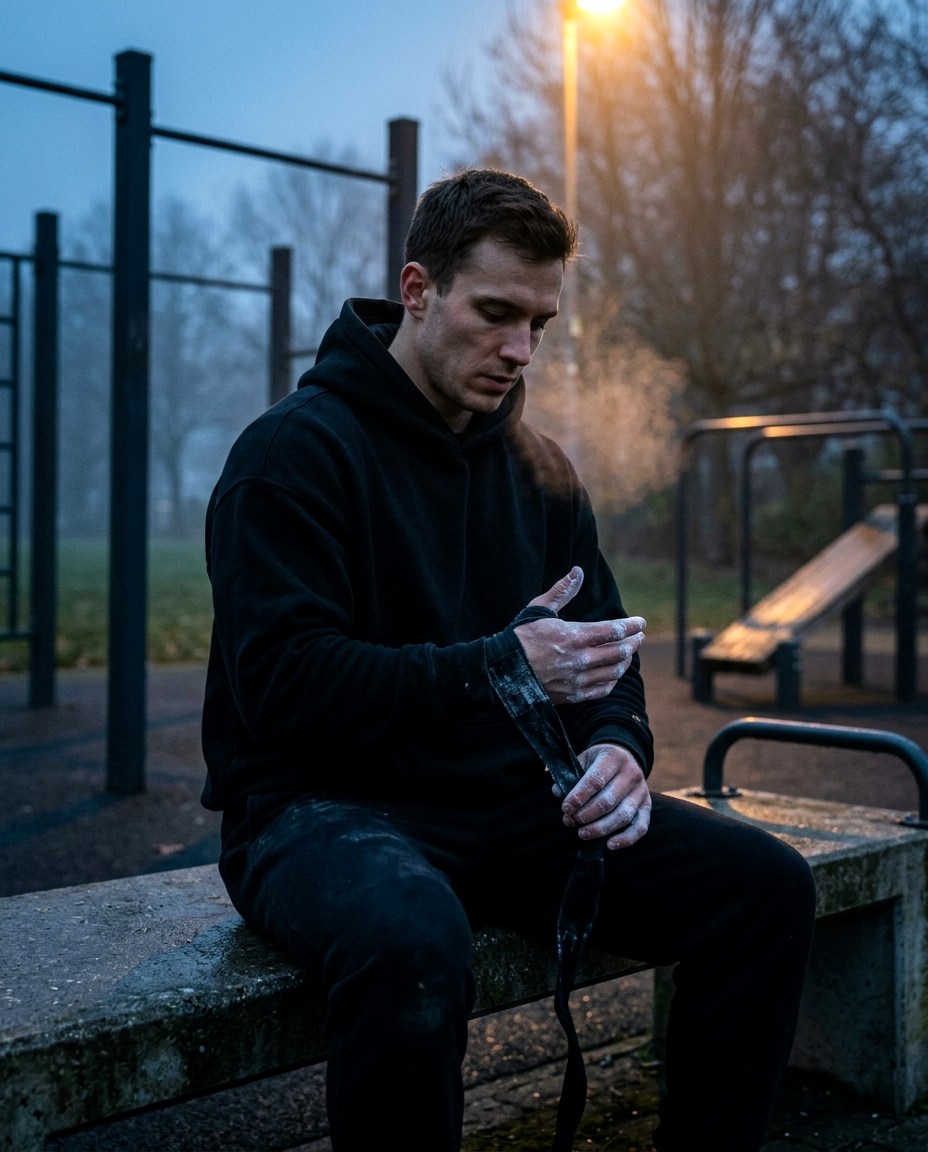
Train Without Sleeve Drag: The Anti Grav Cut-Off ($39.99)
Standard t-shirt sleeves bind across the shoulders the moment your arms travel overhead into a dead hang, muscle-up, or handstand. Our heavyweight raw-edge Cut-Off clears the shoulder blade completely while protecting your waist under a dip belt.
The 28-Day Bar Blueprint: Step-by-Step 4-Week Training Plan
Reading about biomechanics won’t build a single rep unless you bring a clear plan to the bar. Below is your complete, easy-to-follow 4-Week Training Blueprint for Calisthenics and Gymnastics: Same Roots, Different Roads. First, click through Weeks 1 to 4 to see how your effort and reps change each week; then follow the 4 Weekly Workout Cards (Monday, Wednesday, Friday, Saturday) below.
How to Progress Across All 4 Weeks
Pick a progression or weight where every single rep looks textbook. Lower yourself for a full 3-second count and pause 1 second at the bottom.
Film your first and last set from the side at waist height so you have a Day 1 video to compare against Day 28.
Smooth & Controlled: Finish every set feeling like you could have done 3 more clean reps.
Keep the exact same exercise variation or weight as Week 1. Do not rush to a harder variation yet—earn more volume with identical form.
Rest a full 3 minutes between main sets so your last set is just as crisp as your first.
Solid Work: Finish each set with 2 clean reps left in the tank. Zero form breakdown.
Now that your joints and nervous system are grooved, increase the challenge slightly on your first 2 top sets while keeping strict lockout.
Prioritize 8 hours of sleep and high protein (1.6–2.0 g/kg bodyweight) to recover from peak week.
High Tension: Stop 1 rep short of failure. Never grind through elbow or shoulder pain.
Cut your sets by 50% on Monday and Wednesday so fatigue clears and your tendons supercompensate. Take Thursday and Friday off.
On Saturday (Day 28), warm up for 15 minutes and film your new Personal Best from the exact same angle as Day 1.
Fresh & Explosive: Easy sessions Mon/Wed so you feel weightless on Saturday’s test.
Exact Day-by-Day Session Cards
Upper-Body Strength & Skill
Wrist circles, 30s passive hang & 10 active scapular pulls
Handstand balance against wall/freestanding or L-Sit holds
Strict Pull-Ups paired with Parallel-Bar Dips (Rest 90s between moves)
Hollow Body Hold (lower back pressed flat) + Arch Hold
Legs, Core & Mobility
Deep resting squat hold (2 min) + Cossack lunges
Assisted Pistol Squats, Shrimp Squats, or Deep Split Squats
Nordic Hamstring Lowerings or Single-Leg Hip Thrusts
Pancake straddle fold + Pike compression leg lifts
Horizontal Control & Volume
Band shoulder dislocates, wrist rocks & 10 slow push-ups
Tuck Front Lever or Planche Lean with locked elbows
Bodyweight Ring/Bar Rows paired with Diamond or Pseudo-Planche Push-Ups
Two-Arm Dead Hang + 15 Band Face Pulls
Flow, Density & Prehab
5 Pull-Ups + 8 Dips + 10 Squats + 15s L-Sit (Rest 90s per round)
Crow pose, handstand balance, or bar flow transitions
Light wrist curls, reverse wrist curls & finger extensions
Relaxed dead hang and deep nasal breathing
Frequently Asked Questions
How many days per week should I run this Calisthenics and Gymnastics: Same Roots, Different Roads blueprint?
Four sessions per week (Monday, Wednesday, Friday, Saturday) gives you the ideal balance of practice frequency and tendon recovery. If your schedule is tight, perform Monday, Wednesday, and Friday (3 days/week) and keep Tuesday, Thursday, and weekends as active rest.
What if an exercise in the workout card is too hard or too easy for my current level?
Adjust the leverage, not the form. If you cannot hit the minimum reps with locked elbows and a smooth 3-second lowering phase, step back one variation (for example, move from Advanced Tuck to Tuck, or reduce dip-belt weight by 5 kg). If you hit the top of the rep range easily on all sets in Week 3, advance to the next variation in your next 4-week block.
Why do we cut sets in half during Week 4 instead of pushing harder?
Muscles recover in 48 to 72 hours, but tendons and elbow/shoulder connective tissues need every fourth week at lighter volume to finish laying down new collagen fibres (Kjaer et al., 2009; Bohm et al., 2015). Week 4 is where your body locks in the strength you built in Weeks 1–3.
What gear do I actually need in my bag for this 4-week block?
Keep it simple: liquid or block chalk for grip security, a notebook or phone timer to track your sets and 3-minute rests, wooden rings or parallettes if floor work bothers your wrists, and an unrestricted top like the Anti Grav Cut-off ($39.99) paired with a warm layer like the Fleece Zip-Up Boxy Hoodie ($61.94).
Same shapes.
Different roads.
One body to master.
Sources: Fédération Internationale de Gymnastique, Rules; Friedrich Ludwig Jahn; Online Etymology Dictionary on the word’s roots.
Train in the club’s colours. Anti Gravity Club makes training apparel for people who move their own bodyweight: heavyweight boxy hoodies, oversized crewnecks, raw-edge cut-offs and straight-leg sweats built for the bar and the street. Shop the club
Leave a Reply