
Part 9 of 12 in the Journal’s programming series.
Some of the strongest systems in strength sport train a lift almost every day, without ever going near failure. Strength, they say, is a skill. In calisthenics, where so much of the sport is skill, high frequency is one of the most powerful tools there is.
- The Golden Rule: Lock your elbows and set your shoulder blades before your feet ever leave the ground—leverage beats ego every time.
- How to Advance: Only move to the next harder programming progression once you own every set in Week 3 with clean video form.
- Interactive 4-Week Plan: Use the clickable Week 1–4 Coach’s Board below for exact sets, reps, and rest timers.
Grease the groove
The strength coach Pavel Tsatsouline popularised greasing the groove: many easy, perfect sets spread through the day, never close to failure. If your best is 8 pull-ups, do sets of 3 or 4, five to ten times a day, most days of the week, for three or four weeks, then retest.
- Set size — around 40 to 50% of your max reps.
- Sets — five to ten a day, spread out.
- Effort — easy. Never grind.
- Retest — after three or four weeks.
The Russian approach
The Russian coach Boris Sheiko built world champions in powerlifting with high frequency and moderate intensity: many sets of two to five reps at around 70 to 85%, with technique practised constantly. Mapped to weighted pull-ups and dips, it might be three sessions a week of five or six sets of three at 75 to 80% of system load.
Daily skill practice
The handstand, the false grip, the muscle-up transition and the lever shape all respond to frequency. Ten to twenty minutes on most days does more than two long sessions a week.
A high-frequency week for pull-ups
- Monday — 6 sets of 3 at about 75% (bodyweight +10 kg for Sam), plus grease-the-groove sets at home.
- Wednesday — 5 sets of 4 at about 70%, plus grease-the-groove sets.
- Friday — 6 sets of 2 at about 80%, plus grease-the-groove sets.
- Every day — handstand practice, 10 to 15 minutes.
Watch out for
- Straight-arm skills: greasing the groove on planches and levers can overload elbows. Keep those to a few quality exposures a week.
- Creeping effort: easy sets that slowly become hard ones.
- Joint warnings: high frequency needs light, pain-free reps.
Synaptic potentiation and myelination: the neurobiology of Greasing the Groove
When Pavel Tsatsouline coined the phrase Greasing the Groove (GtG)—inspired by Soviet weightlifting sports scientists and Sherrington’s law of facilitation—he summarized a profound neurobiological truth: “Specificity + Frequent Practice = Success.” Every time you execute a crisp, sub-maximal set of pull-ups, one-arm push-ups or handstand holds with zero metabolic acidosis, oligodendrocytes wrap additional layers of myelin around the firing corticospinal axons, while synaptic neurotransmitter release across the neuromuscular junction becomes more efficient (long-term potentiation).
Never exceed 40% to 50% of your current max reps or max hold time on a GtG set (e.g., if your max strict pull-up is 10, every GtG set is 4 or 5 reps; if your max tuck planche is 12 seconds, every GtG exposure is 5 seconds).
Wait at least 45 to 90 minutes between mini-sets so phosphocreatine is 100% restored and central fatigue never accumulates.
Run a GtG block on ONE target movement for 3 to 4 weeks (6 days a week, 1 full rest day), take two easy days off on Days 27–28, and test your new max on Day 29.
While running high-frequency GtG on pull-ups, pause your heavy gym pull-up sessions so total weekly pulling volume does not exceed your elbow tendons’ recovery capacity.

Video Form Audit: How to Spot & Fix the 4 Most Common Breakdowns
When a rep or static hold breaks down on your last set, it always breaks at the weakest link—usually the shoulder blades, the core brace, or the elbow lockout. Film one set per week from the side at waist height and run it through this 4-point diagnostic table for Programming, Part 9: High Frequency: Grease the Groove and Daily Practice:
| What You See on Video | Why It Happens | Joint Risk if Ignored | Instant Coaching Fix & Drill |
|---|---|---|---|
| Shoulders Shrug Up by the Ears | Lower traps and lats lose depression tension under fatigue | Shoulder pinching and loss of pulling/pressing power | Cue: ‘Put your shoulder blades in your back pockets.’ Drill: 3 × 10 Paused Scapular Pulls/Shrugs (hold 3s). |
| Upper Back Collapses on Push/Planche | Serratus anterior fatigues during forward shoulder lean | Front-of-shoulder strain and stalled lockout | Cue: ‘Push the floor away and dome your upper back.’ Drill: 3 × 12 Protraction Push-Ups + 15s Lean Holds. |
| Lower Back Arches (‘Banana Back’) or Hips Pike | Abs and glutes stop bracing against the lever arm | Lower-back compression and a broken body line | Cue: ‘Squeeze glutes hard and pull ribs down to hips.’ Drill: 3 × 40s Flat-Back Hollow Body Holds. |
| Elbows Bend 10° on Straight-Arm Holds | Progression is slightly too hard for current elbow tendons | Inner-elbow tendon ache (‘golfer’s elbow’) and red lights in competition | Cue: ‘Lock your triceps before your feet leave the floor.’ Fix: Step back one easier variation for 3 weeks. |
From Cold Park Warm-Ups to Platform Top Sets
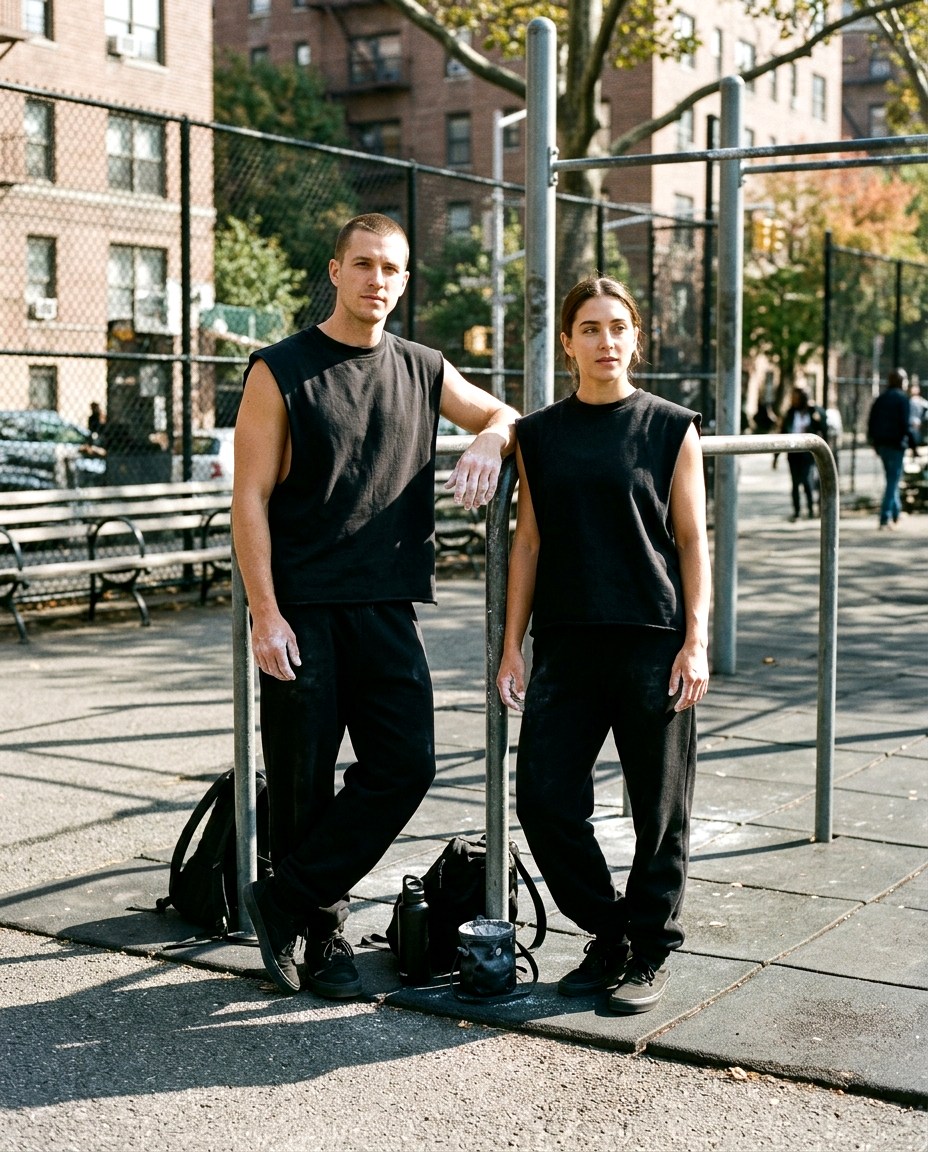
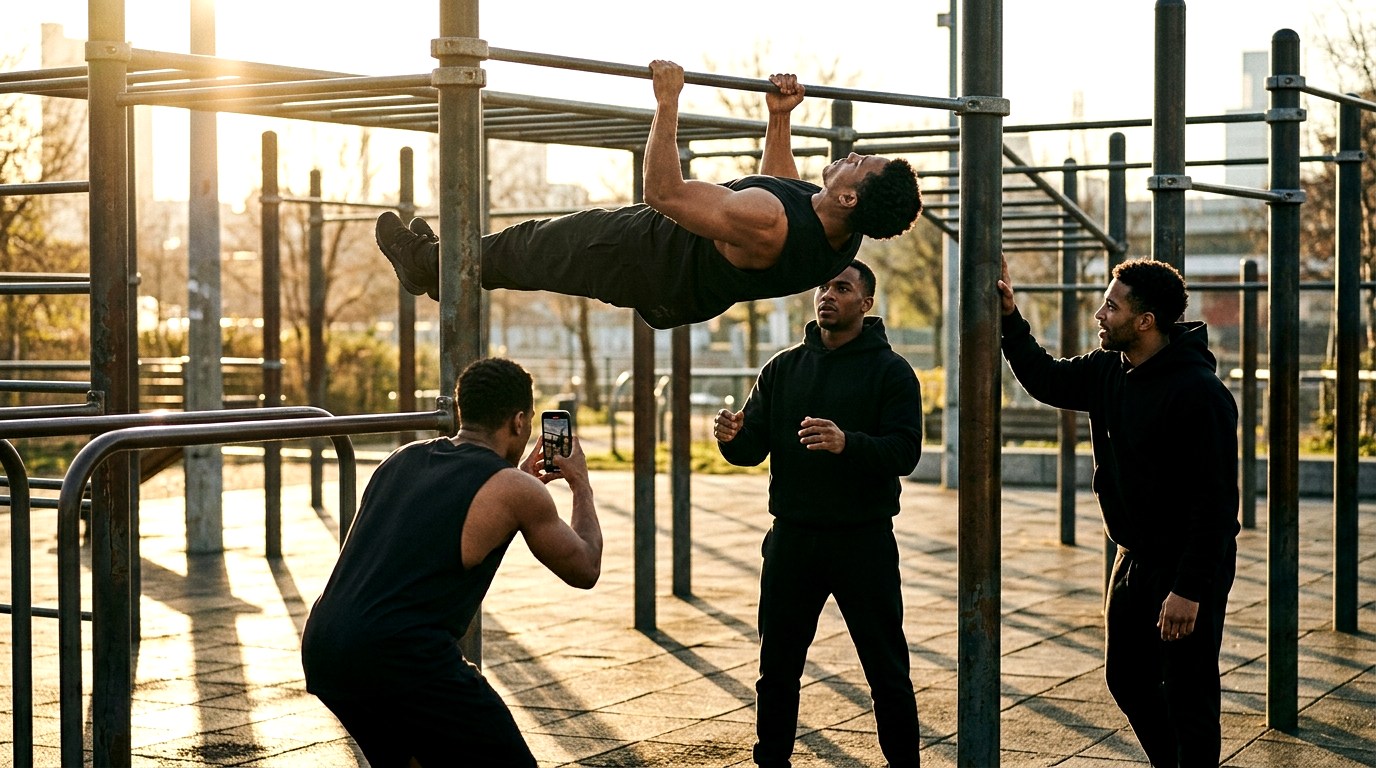
Built for athletes who move their own bodyweight: pair our Fleece Zip-Up Boxy Hoodie ($61.94) and Unisex Oversized OG Crewneck ($39.94) with the raw-edge Anti Grav Cut-Off ($39.99).
The 28-Day Bar Blueprint: Step-by-Step 4-Week Training Plan
Reading about biomechanics won’t build a single rep unless you bring a clear plan to the bar. Below is your complete, easy-to-follow 4-Week Training Blueprint for Programming, Part 9: High Frequency: Grease the Groove and Daily Practice. First, click through Weeks 1 to 4 to see how your effort and reps change each week; then follow the 4 Weekly Workout Cards (Monday, Wednesday, Friday, Saturday) below.
How to Progress Across All 4 Weeks
Pick a progression or weight where every single rep looks textbook. Lower yourself for a full 3-second count and pause 1 second at the bottom.
Film your first and last set from the side at waist height so you have a Day 1 video to compare against Day 28.
Smooth & Controlled: Finish every set feeling like you could have done 3 more clean reps.
Keep the exact same exercise variation or weight as Week 1. Do not rush to a harder variation yet—earn more volume with identical form.
Rest a full 3 minutes between main sets so your last set is just as crisp as your first.
Solid Work: Finish each set with 2 clean reps left in the tank. Zero form breakdown.
Now that your joints and nervous system are grooved, increase the challenge slightly on your first 2 top sets while keeping strict lockout.
Prioritize 8 hours of sleep and high protein (1.6–2.0 g/kg bodyweight) to recover from peak week.
High Tension: Stop 1 rep short of failure. Never grind through elbow or shoulder pain.
Cut your sets by 50% on Monday and Wednesday so fatigue clears and your tendons supercompensate. Take Thursday and Friday off.
On Saturday (Day 28), warm up for 15 minutes and film your new Personal Best from the exact same angle as Day 1.
Fresh & Explosive: Easy sessions Mon/Wed so you feel weightless on Saturday’s test.
Exact Day-by-Day Session Cards
Heavy Weighted Pull-Up & Dip
Log morning bodyweight; warm up with +0 kg, +10 kg, +20 kg×2
Motionless dead hang, chin clearly over bar, 3–4 min rest
Shoulder joint drops below elbow on every rep; lock elbows at top
Chest-Supported / Ring Rows + Band Triceps Pressdowns
Squat, Core & Mobility
Deep goblet squat pry, ankle rocks & glute bridges
Barbell Back Squat or Weighted Pistol Squat (hip crease below knee)
Nordic Hamstring Curls or Romanian Deadlifts
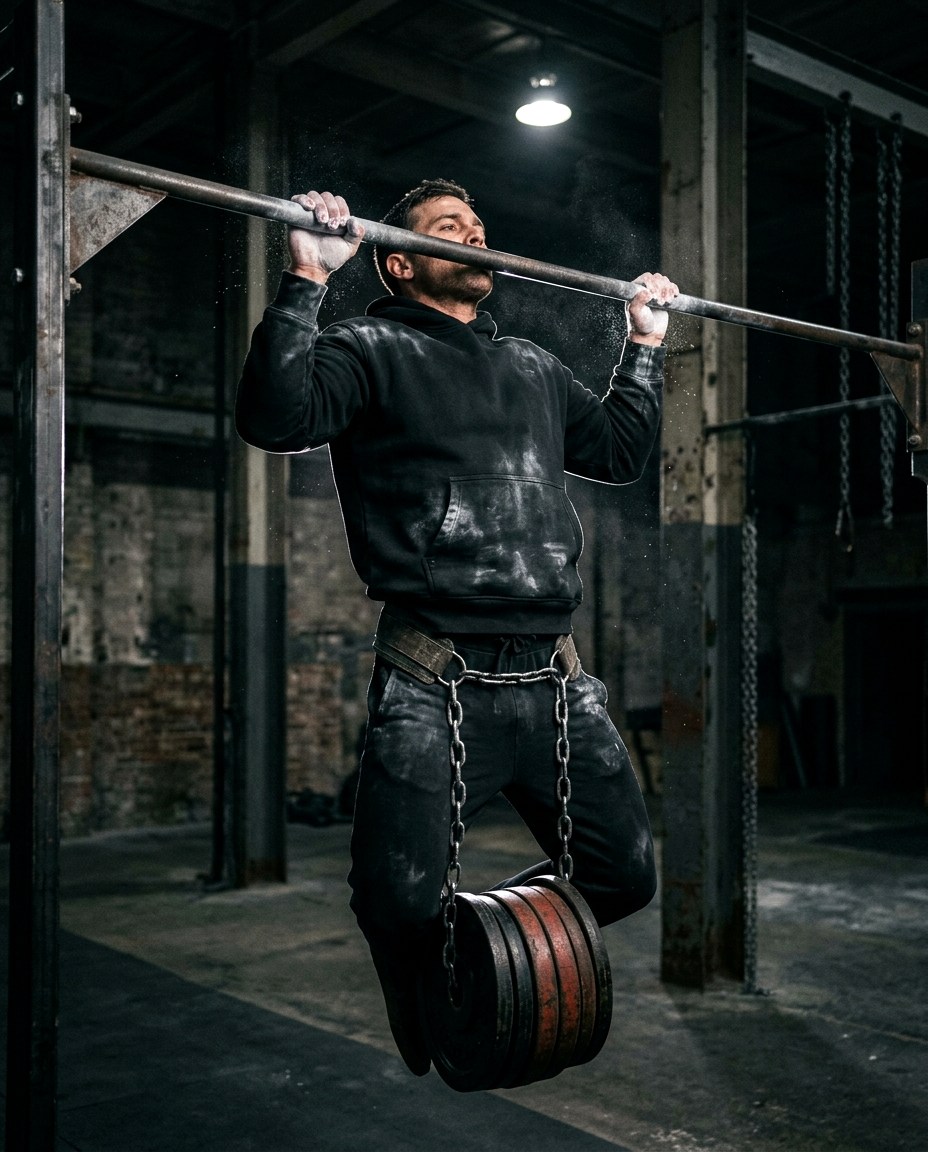
Hanging Toes-to-Bar + 40 sec Dead Hang Decompression
Weighted Muscle-Up & Speed Work
3×3 fast bodyweight high pull-ups + straight-bar dips
Zero hip swing above horizontal; full lockout at top (Rest 3.5 min)
Use ~70% of Monday’s weight; pull and press as fast as possible
External Shoulder Rotations + Pronator/Supinator Dumbbell Turns
Hypertrophy Volume & Recovery
2-second pause at the bottom to build chest and front-delt muscle
Controlled 3-second lowering to thicken lats and brachialis
Ring Biceps Curls + Overhead Triceps Extensions
Flush soreness and prep the nervous system for next week
Frequently Asked Questions
How many days per week should I run this Programming, Part 9: High Frequency: Grease the Groove and Daily Practice blueprint?
Four sessions per week (Monday, Wednesday, Friday, Saturday) gives you the ideal balance of practice frequency and tendon recovery. If your schedule is tight, perform Monday, Wednesday, and Friday (3 days/week) and keep Tuesday, Thursday, and weekends as active rest.
What if an exercise in the workout card is too hard or too easy for my current level?
Adjust the leverage, not the form. If you cannot hit the minimum reps with locked elbows and a smooth 3-second lowering phase, step back one variation (for example, move from Advanced Tuck to Tuck, or reduce dip-belt weight by 5 kg). If you hit the top of the rep range easily on all sets in Week 3, advance to the next variation in your next 4-week block.
Why do we cut sets in half during Week 4 instead of pushing harder?
Muscles recover in 48 to 72 hours, but tendons and elbow/shoulder connective tissues need every fourth week at lighter volume to finish laying down new collagen fibres (Kjaer et al., 2009; Bohm et al., 2015). Week 4 is where your body locks in the strength you built in Weeks 1–3.
What gear do I actually need in my bag for this 4-week block?
Keep it simple: liquid or block chalk for grip security, a notebook or phone timer to track your sets and 3-minute rests, wooden rings or parallettes if floor work bothers your wrists, and an unrestricted top like the Anti Grav Cut-off ($39.99) paired with a warm layer like the Fleece Zip-Up Boxy Hoodie ($61.94).
Practise strength.
Every day.
Nothing here is medical advice. Build up gradually, and see a qualified professional about pain that is sharp or lasts.
Train in the club’s colours. Anti Gravity Club makes training apparel for people who move their own bodyweight: heavyweight boxy hoodies, oversized crewnecks, raw-edge cut-offs and straight-leg sweats built for the bar and the street. Shop the club


Leave a Reply