
A pull-up bar at home turns every spare minute into training time. But the type you choose decides what you can do on it. Here are the six kinds of home pull-up bar, ranked for calisthenics, and what to check before you buy.
- What Matters Most: Buy durable, competition-grade essentials that survive outdoor weather and heavy chalk instead of gimmicky gadgets.
- How to Choose: Match your lists setup to your current strength tier (Foundation, Intermediate, or Streetlifter).
- Action Plan Included: Scroll to the interactive 28-Day Bar Blueprint below for your exact Monday–Saturday schedule.
1. Wall-mounted bars: the best all-rounder
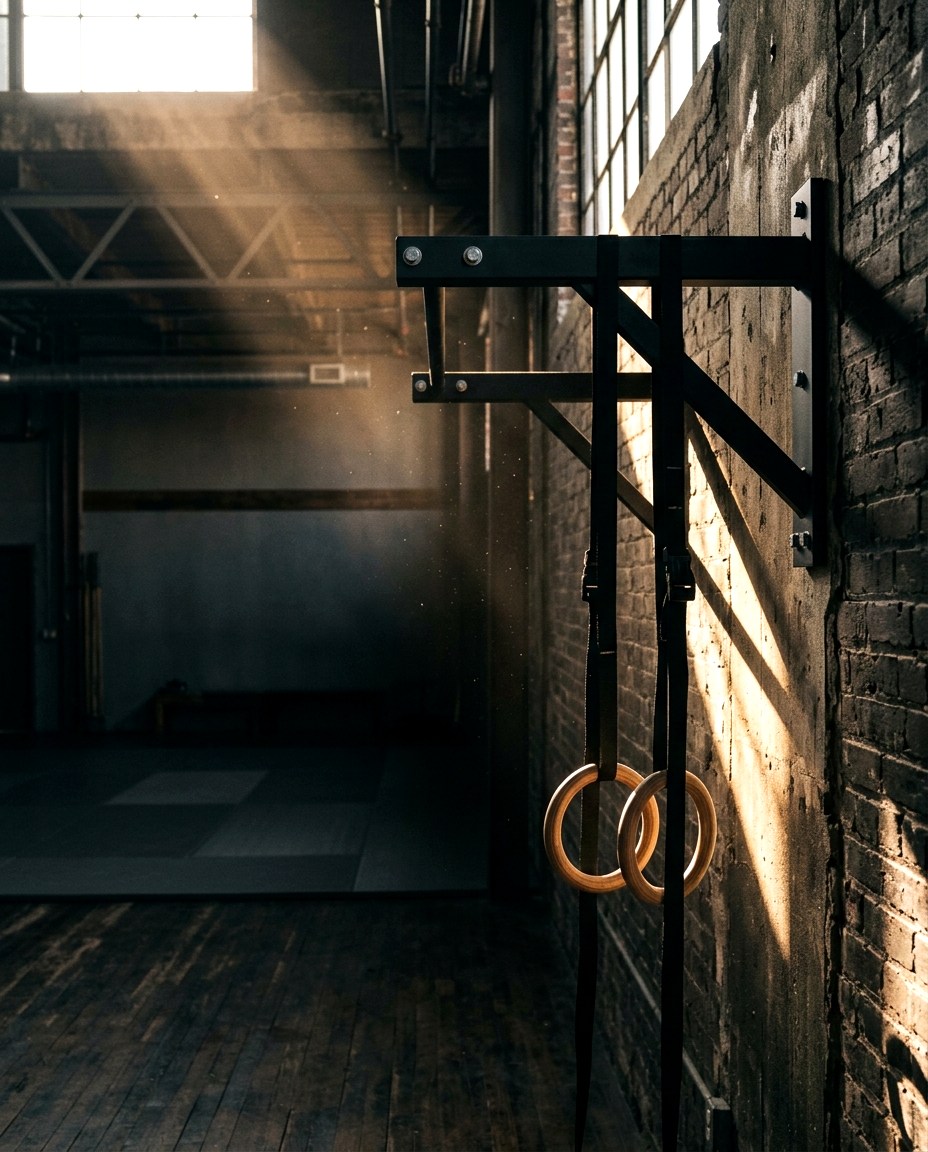
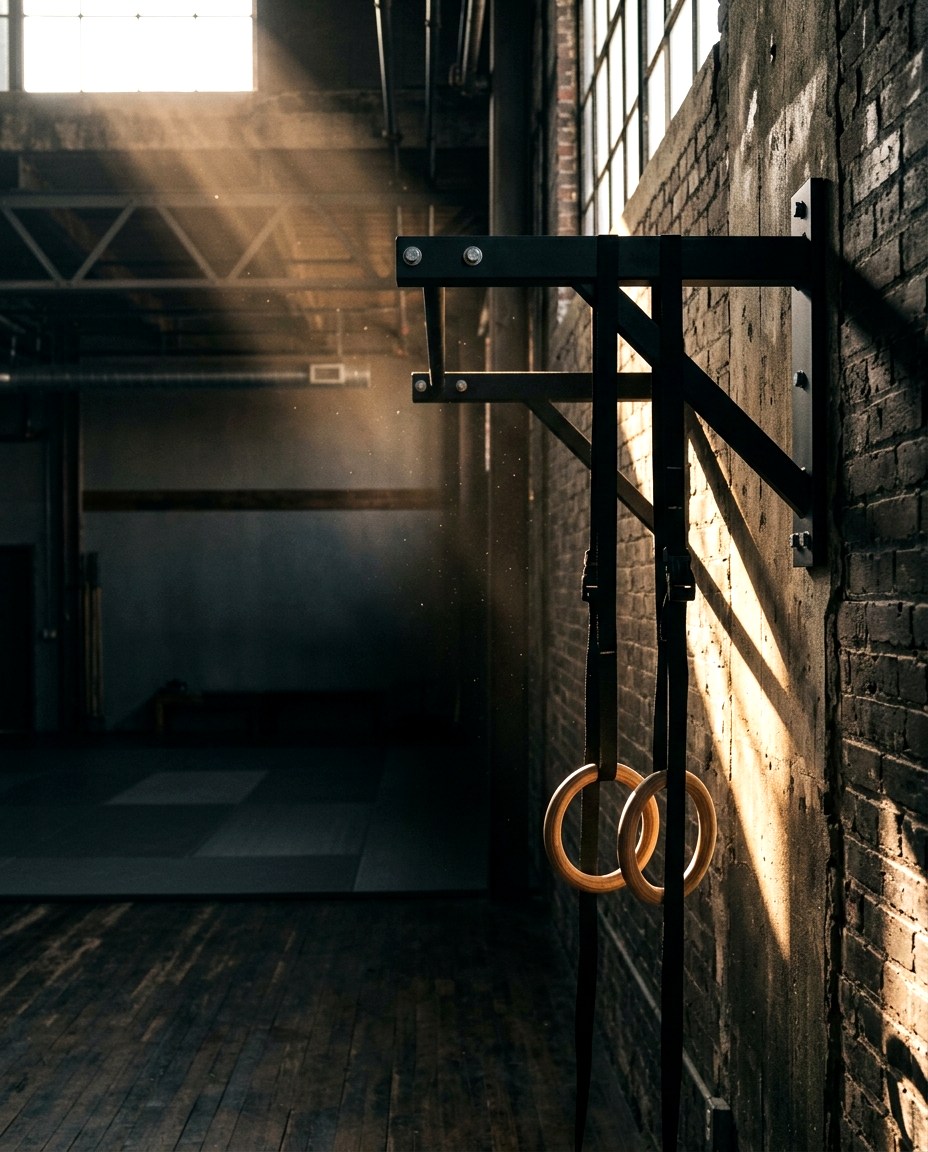
Bolted into solid masonry or studs, they hold the most weight, stand off the wall far enough for muscle-ups and kipping, and never move. The catch: you need a strong wall and a drill.
2. Ceiling-mounted bars: the most room
Hung from joists, they leave space all around the bar, which suits muscle-ups, levers and hanging leg raises. Check the joists and the height of the room first.
3. Freestanding towers: no drilling
A pull-up and dip station that stands on its own. Good for renters and for dips, but lighter towers can rock under dynamic work, so choose a wide, heavy base.
4. Rack-mounted bars: for the home gym
If you have a power rack, its pull-up bar is usually the sturdiest in the house and often comes with several grips.
5. Door-frame (screw-in) bars: compact and solid
Fixed inside the door frame with brackets. Steady for strict pull-ups, but the frame limits your range: no muscle-ups, no swings.
6. Doorway leverage bars: the quickest start
They hook over the door frame and stay put by leverage. Fine for pull-ups and hangs, but not for anything dynamic, and they can mark the frame.
What to check
- Load rating — well above your bodyweight, and more for dynamic work.
- Bar thickness — a bar your hand closes around; very thick bars tire the grip fast.
- Clearance — room above for your head and in front for your knees.
- Your walls — brick, concrete or studs for wall and ceiling mounts.
- What you will train — strict pulls fit anywhere; muscle-ups and levers need space.
Installation engineering: wall stand-off distance, lag bolts, and bar knurling
When you install a pull-up bar at home, the difference between a bar you use for five minutes a week and a bar you can train your whole career on comes down to four structural numbers:
Cheap wall bars sit only 30 cm from the wall—forcing your knees or head to hit the drywall on hollow pull-ups, front levers and muscle-ups. Choose a heavy-duty triangulation bracket with at least 60 to 80 cm (24–32 inches) of wall clearance.
Avoid slick chrome-plated tubes or thick foam-padded grips that tear and spin. Look for a 30–32 mm solid or thick-wall steel bar with a fine matte black powder coat that holds chalk like raw park steel.
For brick or poured concrete walls, use M10 or M12 sleeve/wedge anchors; for wood-stud walls (16-inch or 24-inch on center), bolt vertical stringer plates into the center of the studs using 3/8-inch × 3.5-inch hex lag screws.
A strict pull-up only requires 30 cm above the bar for your head, but a bar muscle-up or straight-bar dip requires 75–90 cm (30–36 inches) of clear vertical space above the rail.
Stage-by-Stage Comparison: What You Need at Each Level
What works in your first three months at a local park is different from what you need when you are hanging two 20 kg plates from a dip belt or working toward a full front lever. Cheap chrome bars get slick in summer humidity, thin bands lose tension after a season in a backpack, and tight sleeves restrict your shoulders as soon as you reach overhead. Use the comparison table below to match The Best Pull-Up Bars for Home: 6 Types Ranked to your current level:
| Athlete Stage | Main Focus at the Bar | What to Look For | Mistake to Avoid | Recommended AGC Kit |
|---|---|---|---|---|
| Beginner (Months 0–6) 0–8 Pull-Ups · Learning Form | Building grip endurance, active shoulders, and 3-second lowering control (3–4 days/week) | 28–32 mm grip bar, 28 mm birch wooden rings, liquid chalk, and a training logbook | Buying workout gloves or gimmicks instead of building real calluses and shoulder control | Anti Grav Cut-off ($39.99) + Sorona Classic Tee ($25.94) |
| Intermediate (Months 6–24) 10–15 Pull-Ups · First Muscle-Up & Tuck Holds | Adding small weights (+5–25 kg), bridging leverage gaps, and 15 min handstands | Contoured dip belt, 40 mm wooden parallettes, and cloth twist-lock wrist wraps | Jumping to full levers/planche before your elbow tendons have adapted | Anti Grav Cut-off ($39.99) + Oversized OG Crewneck ($39.94) |
| Advanced & Streetlifter (Years 2+) +35–75 kg Pull-Up · Full Statics & Meets | 4-week wave blocks, strict competition depth, and year-round joint health | ISF-legal non-elastic dip belt strap, 0.5 kg micro-plates, and side-angle phone tripod | Maxing out to sloppy failure every workout instead of stacking crisp sets | Fleece Zip-Up Boxy Hoodie ($61.94) + Anti Grav Cut-off |

From Cold Park Warm-Ups to Platform Top Sets
Built for athletes who move their own bodyweight: pair our Fleece Zip-Up Boxy Hoodie ($61.94) and Unisex Oversized OG Crewneck ($39.94) with the raw-edge Anti Grav Cut-Off ($39.99).
The 28-Day Bar Blueprint: Step-by-Step 4-Week Training Plan
Reading about biomechanics won’t build a single rep unless you bring a clear plan to the bar. Below is your complete, easy-to-follow 4-Week Training Blueprint for The Best Pull-Up Bars for Home: 6 Types Ranked. First, click through Weeks 1 to 4 to see how your effort and reps change each week; then follow the 4 Weekly Workout Cards (Monday, Wednesday, Friday, Saturday) below.
How to Progress Across All 4 Weeks
Pick a progression or weight where every single rep looks textbook. Lower yourself for a full 3-second count and pause 1 second at the bottom.
Film your first and last set from the side at waist height so you have a Day 1 video to compare against Day 28.
Smooth & Controlled: Finish every set feeling like you could have done 3 more clean reps.
Keep the exact same exercise variation or weight as Week 1. Do not rush to a harder variation yet—earn more volume with identical form.
Rest a full 3 minutes between main sets so your last set is just as crisp as your first.
Solid Work: Finish each set with 2 clean reps left in the tank. Zero form breakdown.
Now that your joints and nervous system are grooved, increase the challenge slightly on your first 2 top sets while keeping strict lockout.
Prioritize 8 hours of sleep and high protein (1.6–2.0 g/kg bodyweight) to recover from peak week.
High Tension: Stop 1 rep short of failure. Never grind through elbow or shoulder pain.
Cut your sets by 50% on Monday and Wednesday so fatigue clears and your tendons supercompensate. Take Thursday and Friday off.
On Saturday (Day 28), warm up for 15 minutes and film your new Personal Best from the exact same angle as Day 1.
Fresh & Explosive: Easy sessions Mon/Wed so you feel weightless on Saturday’s test.
Exact Day-by-Day Session Cards
Explosive Skill & Heavy Pull
30s dead hang, 2×10 scapular pulls & wrist/forearm rotations
High Pull-Ups, Muscle-Up Transitions, or Front Lever Holds (Rest 3 min)
Strict Dead-Hang Pull-Ups (weighted or bodyweight; pause 1s at bottom)
Ring Pelicans / Supinated Curls + Finger-Band Extensions
Horizontal Rows & Slow Control
Active hangs, cat-cow spine waves & band pull-aparts
Tuck Front Lever Rows or Feet-Elevated Ring Rows (pause 1s at chest)
Full-Range Parallel-Bar Dips or Deficit Push-Ups
Strict Hanging Leg Raises (zero swing) + 20s L-Sit Hold
Bar Speed & Back Volume
2×5 scapular pulls + 2×3 explosive chest-to-bar pull-ups
Front/Back Lever, Human Flag, or Explosive Pulls (Rest 3 min)
Every minute on the minute: 3 to 5 strict Chin-Ups or Neutral Pull-Ups
Towel Hang, False-Grip Hang, or Thick-Bar Dead Hang
Legs, Mobility & Hand Care
Pistol Squat Progressions or Deep Step-Ups
Nordic Hamstring Curls or Glute-Ham Bridges
Skin-the-Cat mobility stretch + Jefferson Curls
Sand raised callus ridges flat with pumice stone & apply hand balm
Frequently Asked Questions
How many days per week should I run this The Best Pull-Up Bars for Home: 6 Types Ranked blueprint?
Four sessions per week (Monday, Wednesday, Friday, Saturday) gives you the ideal balance of practice frequency and tendon recovery. If your schedule is tight, perform Monday, Wednesday, and Friday (3 days/week) and keep Tuesday, Thursday, and weekends as active rest.
What if an exercise in the workout card is too hard or too easy for my current level?
Adjust the leverage, not the form. If you cannot hit the minimum reps with locked elbows and a smooth 3-second lowering phase, step back one variation (for example, move from Advanced Tuck to Tuck, or reduce dip-belt weight by 5 kg). If you hit the top of the rep range easily on all sets in Week 3, advance to the next variation in your next 4-week block.
Why do we cut sets in half during Week 4 instead of pushing harder?
Muscles recover in 48 to 72 hours, but tendons and elbow/shoulder connective tissues need every fourth week at lighter volume to finish laying down new collagen fibres (Kjaer et al., 2009; Bohm et al., 2015). Week 4 is where your body locks in the strength you built in Weeks 1–3.
What gear do I actually need in my bag for this 4-week block?
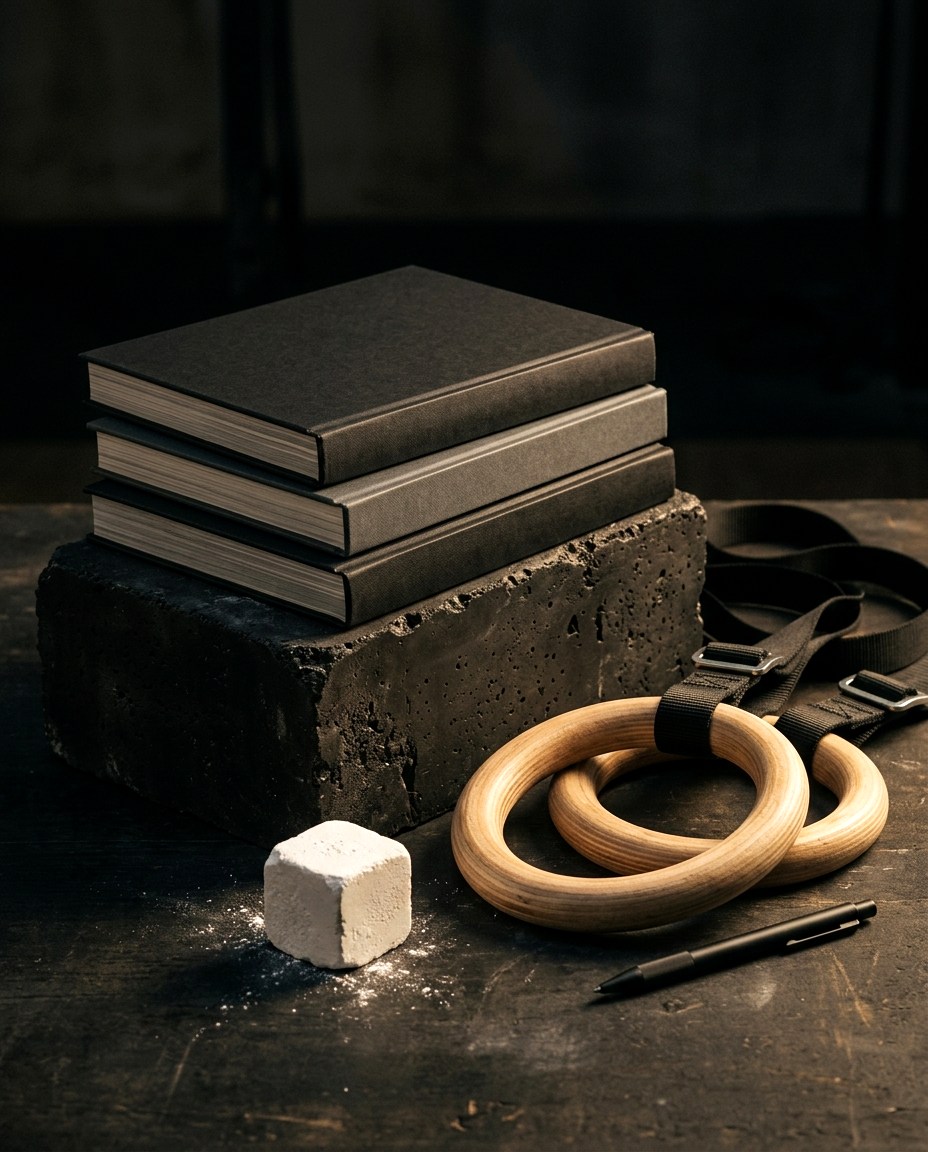
Keep it simple: liquid or block chalk for grip security, a notebook or phone timer to track your sets and 3-minute rests, wooden rings or parallettes if floor work bothers your wrists, and an unrestricted top like the Anti Grav Cut-off ($39.99) paired with a warm layer like the Fleece Zip-Up Boxy Hoodie ($61.94).
Nothing here is medical advice. Build up gradually, and see a qualified professional about pain that is sharp or lasts.
Train in the club’s colours. Anti Gravity Club makes training apparel for people who move their own bodyweight. Shop the club


Leave a Reply