
The oldest argument in the gym: you cannot build real muscle without weights. Look at the athletes at the top of calisthenics and the argument already looks weak. Look at the research and it falls apart, with one important exception.
- Core Takeaway: Real progress in muscle comes from strict full-range reps, tendon patience, and logging every session in ink.
- The Science in Plain English: Muscles adapt in weeks, while tendons need structured 3-week build blocks followed by a Week 4 recovery deload.
- Put It Into Practice: Follow the interactive 28-Day Bar Blueprint below on Monday, Wednesday, Friday, and Saturday.
What the studies show
In a 2017 study in the Journal of Exercise Science & Fitness, young men trained either the bench press or push-ups adjusted to the same load. Chest muscle thickness grew by 18.3% with push-ups and 19.4% with the bench press: no meaningful difference. Matched for effort, the body could not tell a push-up from a barbell.
A 2017 meta-analysis by Schoenfeld and colleagues went further. Across the studies, light loads trained close to failure built muscle as well as heavy loads did. Heavy loads, though, built more maximal strength.
Muscle responds to effort. It does not ask where the load came from.
What really builds muscle
- Effort: sets taken close to failure, with good form.
- Progressive overload: the work keeps getting harder over weeks and months.
- Volume: enough hard sets per muscle each week, often ten or more.
- Recovery: sleep, and around 1.6 g of protein per kilogram of bodyweight a day.
How calisthenics overloads
Without plates, you make the work harder in other ways: more reps, slower tempos, longer pauses, deeper ranges and harder leverage. A push-up becomes an archer push-up, then a pseudo-planche push-up. A row becomes a one-arm row. A squat becomes a pistol.
The exception: maximal strength and legs
If your goal is the heaviest possible lift, heavy loads win, which is exactly why streetlifting adds weight to pull-ups, dips and the squat. And legs are strong enough that bodyweight squats stop challenging them quickly; single-leg work, jumps and added weight keep them growing.
- Push-ups vs bench press — 18.3% and 19.4% chest growth: no meaningful difference.
- Light vs heavy loads — similar muscle growth close to failure; heavy loads build more strength.
- Protein — about 1.6 g per kilogram a day.
- Overload — reps, tempo, range, leverage, then added weight.
Built by bodyweight
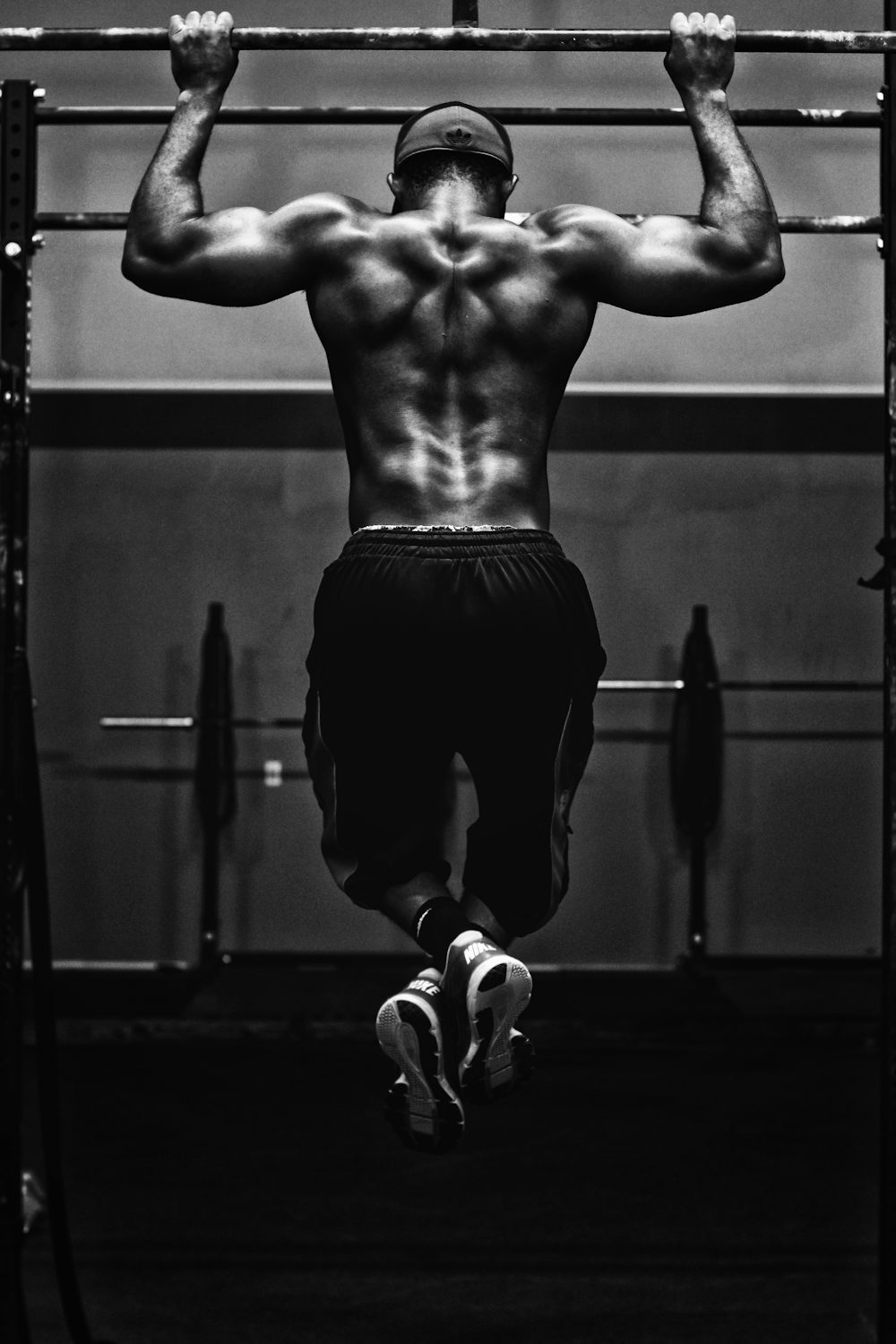
Calisthenics builds a particular kind of body: muscle that is strong in every position, connected through the core, and light enough to fly. You do not need a rack of plates to build it. You need effort, patience and harder progressions, year after year.
The three mechanisms of hypertrophy and how leverage replaces iron plates
Skeletal muscle fibres do not have eyes; they do not know whether the resistance pulling against their actin-myosin cross-bridges comes from a chrome dumbbell, a cast-iron plate, or the gravitational torque of your own torso extended horizontal to the floor. Muscle tissue responds to mechanical tension across a full range of motion, supported by metabolic stress and sufficient motor unit recruitment (Henneman’s size principle).
When Kikuchi & Nakazato (2017) compared 8 weeks of load-matched push-ups against the barbell bench press, ultrasound measurements showed virtually identical pectoralis major and triceps brachii hypertrophy (18.3% vs 19.4%). And when Schoenfeld et al. (2017) pooled 21 studies comparing low-load (<60% 1RM) and high-load (>60% 1RM) training carried close to failure, hypertrophy was equivalent across both loading zones. Why, then, do some people stop growing on bodyweight push-ups and pull-ups? Because they stay on the easiest leverage variation and turn a hypertrophy workout into an aerobic endurance set of 40 half-reps.
Shifting from a standard push-up to a pseudo-planche push-up or archer push-up increases the moment arm at the shoulder and shifts 70–85% of your bodyweight onto the working prime movers, keeping you in the 6–12 rep hypertrophy sweet spot.
Modern hypertrophy research shows that loading a muscle at long sarcomere lengths (the deep stretch at the bottom of ring push-ups, parallette deficit push-ups, deep dips and Nordic curls) triggers superior longitudinal and radial muscle growth.
A 3-to-4-second lowering phase followed by a 1-second pause at maximum stretch eliminates elastic bounce and forces high-threshold motor units to fire from the very first rep.
Aim for 12 to 18 hard sets per week for your back, chest/shoulders and legs, stopping 1 to 2 reps short of technical failure (RPE 8–9), backed by 1.6–2.2 g/kg of daily protein.
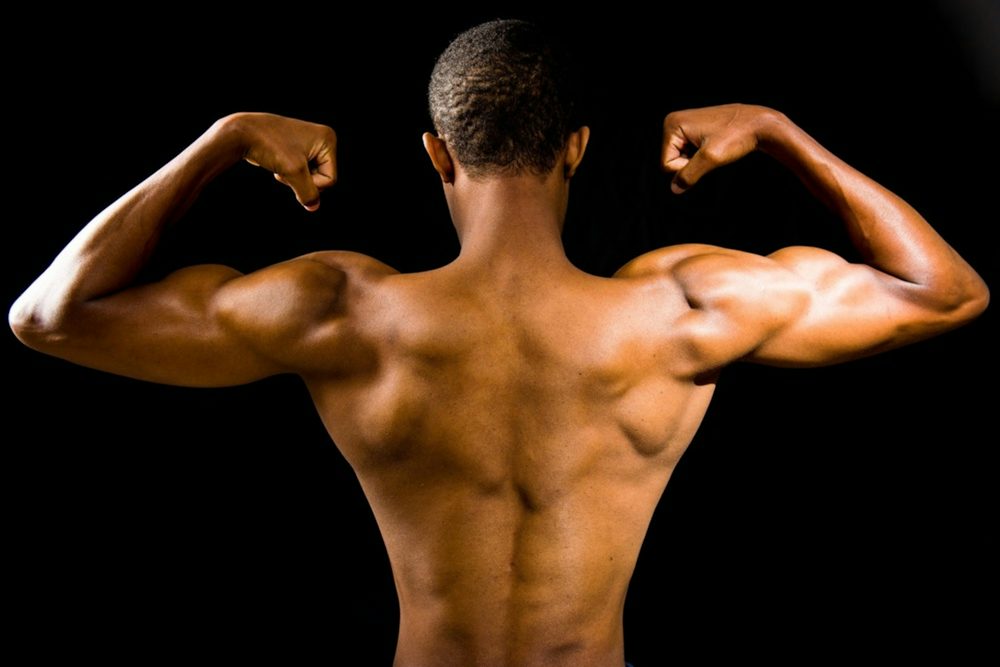
The Park vs. Platform Reality Check: What Separates Real Progress From Ego
Ten-second social media clips only show the one lucky attempt filmed on fresh legs. Real calisthenics happens on a cold morning when nobody is watching, or on a competition platform when three referees are staring at your elbow lockout. Here is how the Anti Gravity Club standard compares to common park shortcuts in Can You Build Muscle with Bodyweight? What the Research Says:
| Training Habit | The Ego / Highlight-Reel Mistake | The Anti Gravity Club Standard | Result After 12 Months |
|---|---|---|---|
| Range of Motion | Stopping 2 inches short of a dead hang on pull-ups and cutting dips shallow | Dead stop at the bottom to chin/chest over bar; shoulder below elbow on every dip (ISF Rules v5.2) | Thicker muscle belly growth, bulletproof joints at full range, and competition-legal reps |
| Static Hold Quality | Holding a shaky 2-second progression with bent elbows and piked hips | Stacking 5–6 crisp sets of 6–8 seconds with locked triceps and squeezed glutes | Pain-free elbows and steady progression to straddle and full holds |
| Tracking Progress | Doing random circuits until tired with no record of reps, weights, or rest | Writing down Bodyweight + Belt Weight, sets, reps, and 3-minute rests in a logbook | Predictable strength gains every 4-week block with zero guesswork |
| Joint Recovery | Ignoring wrist or elbow tightness until an injury forces months off | 8-minute warm-up before every session and a lighter Week 4 deload every month | 52 unbroken weeks of training—the real secret behind elite calisthenics athletes |
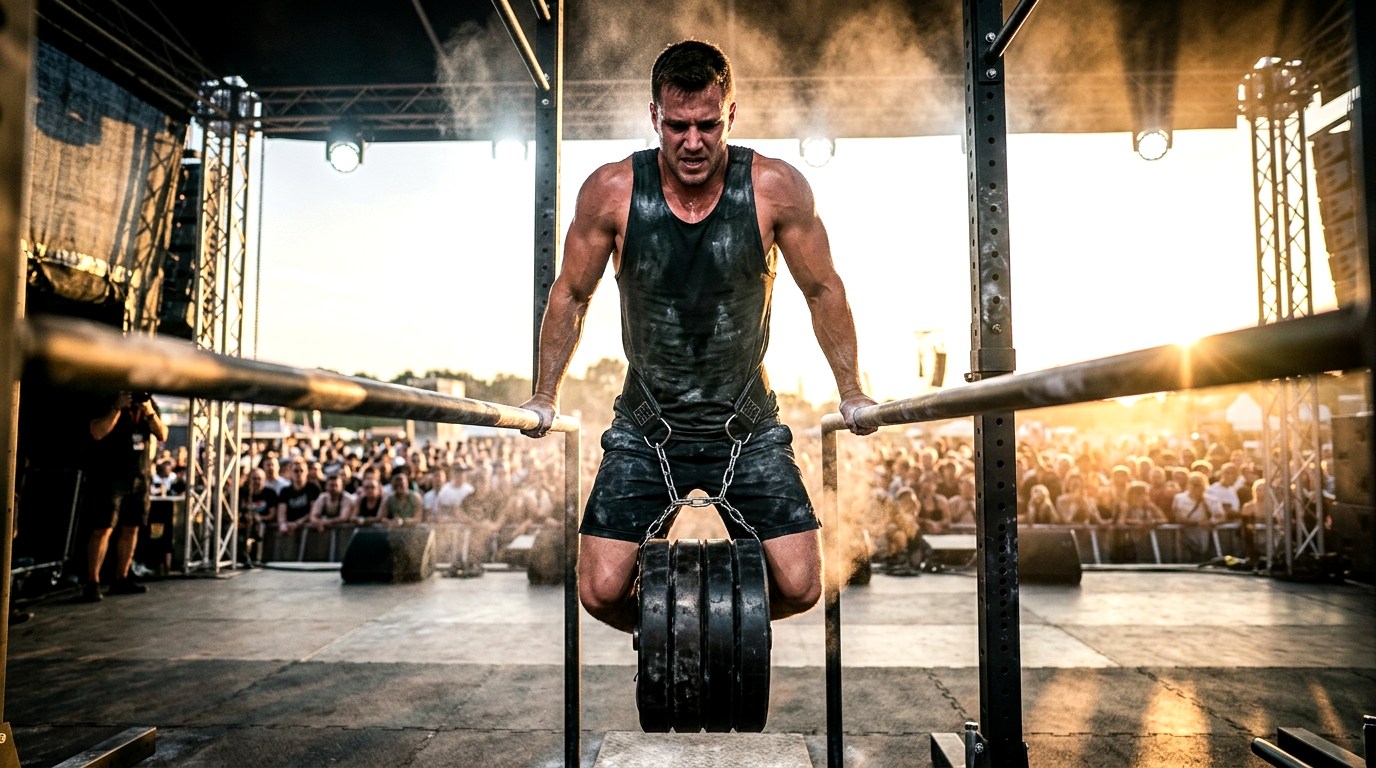

Train Without Sleeve Drag: The Anti Grav Cut-Off ($39.99)
Standard t-shirt sleeves bind across the shoulders the moment your arms travel overhead into a dead hang, muscle-up, or handstand. Our heavyweight raw-edge Cut-Off clears the shoulder blade completely while protecting your waist under a dip belt.
The 28-Day Bar Blueprint: Step-by-Step 4-Week Training Plan
Reading about biomechanics won’t build a single rep unless you bring a clear plan to the bar. Below is your complete, easy-to-follow 4-Week Training Blueprint for Can You Build Muscle with Bodyweight? What the Research Says. First, click through Weeks 1 to 4 to see how your effort and reps change each week; then follow the 4 Weekly Workout Cards (Monday, Wednesday, Friday, Saturday) below.
How to Progress Across All 4 Weeks
Pick a progression or weight where every single rep looks textbook. Lower yourself for a full 3-second count and pause 1 second at the bottom.
Film your first and last set from the side at waist height so you have a Day 1 video to compare against Day 28.
Smooth & Controlled: Finish every set feeling like you could have done 3 more clean reps.
Keep the exact same exercise variation or weight as Week 1. Do not rush to a harder variation yet—earn more volume with identical form.
Rest a full 3 minutes between main sets so your last set is just as crisp as your first.
Solid Work: Finish each set with 2 clean reps left in the tank. Zero form breakdown.
Now that your joints and nervous system are grooved, increase the challenge slightly on your first 2 top sets while keeping strict lockout.
Prioritize 8 hours of sleep and high protein (1.6–2.0 g/kg bodyweight) to recover from peak week.
High Tension: Stop 1 rep short of failure. Never grind through elbow or shoulder pain.
Cut your sets by 50% on Monday and Wednesday so fatigue clears and your tendons supercompensate. Take Thursday and Friday off.
On Saturday (Day 28), warm up for 15 minutes and film your new Personal Best from the exact same angle as Day 1.
Fresh & Explosive: Easy sessions Mon/Wed so you feel weightless on Saturday’s test.
Exact Day-by-Day Session Cards
Upper-Body Strength & Skill
Wrist circles, 30s passive hang & 10 active scapular pulls
Handstand balance against wall/freestanding or L-Sit holds
Strict Pull-Ups paired with Parallel-Bar Dips (Rest 90s between moves)
Hollow Body Hold (lower back pressed flat) + Arch Hold
Legs, Core & Mobility
Deep resting squat hold (2 min) + Cossack lunges
Assisted Pistol Squats, Shrimp Squats, or Deep Split Squats
Nordic Hamstring Lowerings or Single-Leg Hip Thrusts
Pancake straddle fold + Pike compression leg lifts
Horizontal Control & Volume
Band shoulder dislocates, wrist rocks & 10 slow push-ups
Tuck Front Lever or Planche Lean with locked elbows
Bodyweight Ring/Bar Rows paired with Diamond or Pseudo-Planche Push-Ups
Two-Arm Dead Hang + 15 Band Face Pulls
Flow, Density & Prehab
5 Pull-Ups + 8 Dips + 10 Squats + 15s L-Sit (Rest 90s per round)
Crow pose, handstand balance, or bar flow transitions
Light wrist curls, reverse wrist curls & finger extensions
Relaxed dead hang and deep nasal breathing
Frequently Asked Questions
How many days per week should I run this Can You Build Muscle with Bodyweight? What the Research Says blueprint?
Four sessions per week (Monday, Wednesday, Friday, Saturday) gives you the ideal balance of practice frequency and tendon recovery. If your schedule is tight, perform Monday, Wednesday, and Friday (3 days/week) and keep Tuesday, Thursday, and weekends as active rest.
What if an exercise in the workout card is too hard or too easy for my current level?
Adjust the leverage, not the form. If you cannot hit the minimum reps with locked elbows and a smooth 3-second lowering phase, step back one variation (for example, move from Advanced Tuck to Tuck, or reduce dip-belt weight by 5 kg). If you hit the top of the rep range easily on all sets in Week 3, advance to the next variation in your next 4-week block.
Why do we cut sets in half during Week 4 instead of pushing harder?
Muscles recover in 48 to 72 hours, but tendons and elbow/shoulder connective tissues need every fourth week at lighter volume to finish laying down new collagen fibres (Kjaer et al., 2009; Bohm et al., 2015). Week 4 is where your body locks in the strength you built in Weeks 1–3.
What gear do I actually need in my bag for this 4-week block?
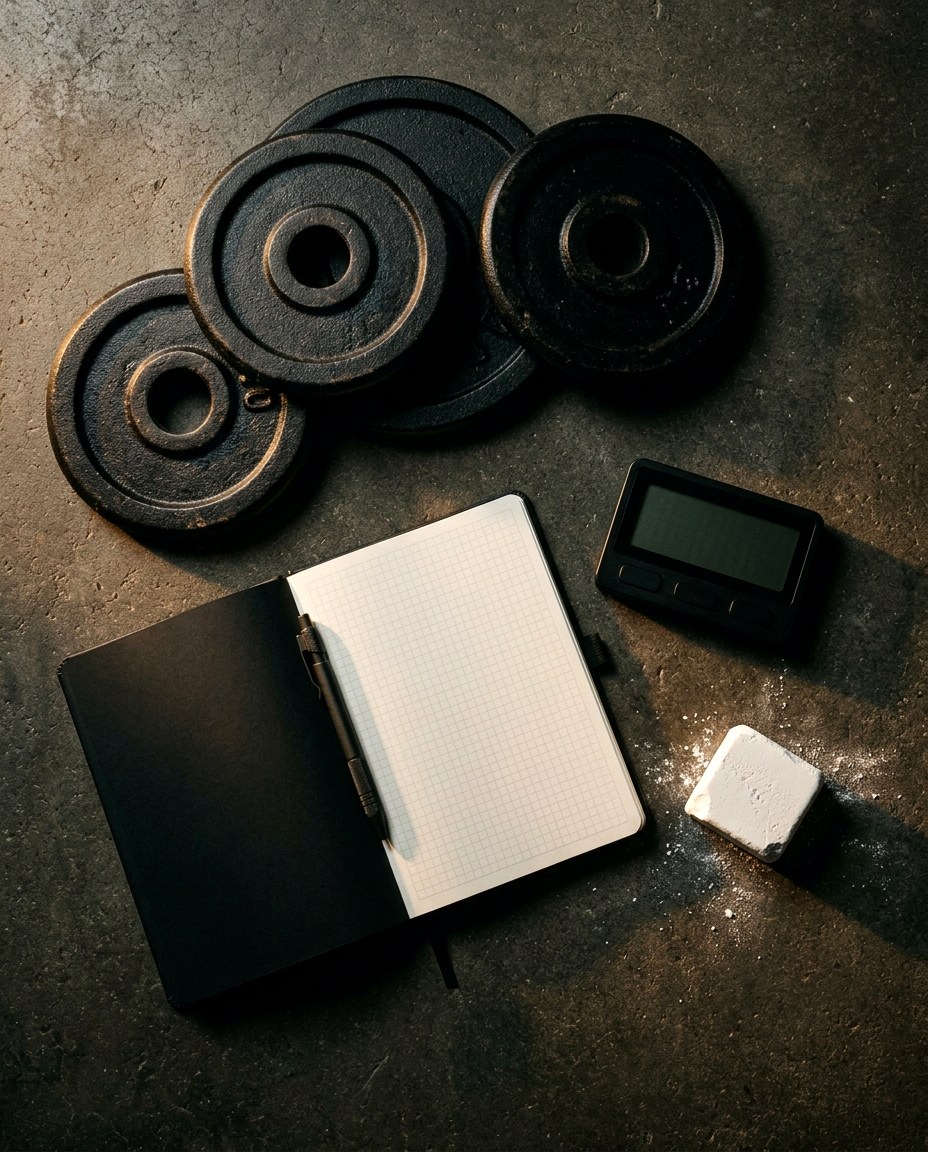
Keep it simple: liquid or block chalk for grip security, a notebook or phone timer to track your sets and 3-minute rests, wooden rings or parallettes if floor work bothers your wrists, and an unrestricted top like the Anti Grav Cut-off ($39.99) paired with a warm layer like the Fleece Zip-Up Boxy Hoodie ($61.94).
No plates required.
Effort is the load.
Sources: Kikuchi & Nakazato, Journal of Exercise Science & Fitness, 2017; Schoenfeld et al., Journal of Strength and Conditioning Research, 2017; Morton et al., British Journal of Sports Medicine, 2018.
Train in the club’s colours. Anti Gravity Club makes training apparel for people who move their own bodyweight: heavyweight boxy hoodies, oversized crewnecks, raw-edge cut-offs and straight-leg sweats built for the bar and the street. Shop the club

Leave a Reply