
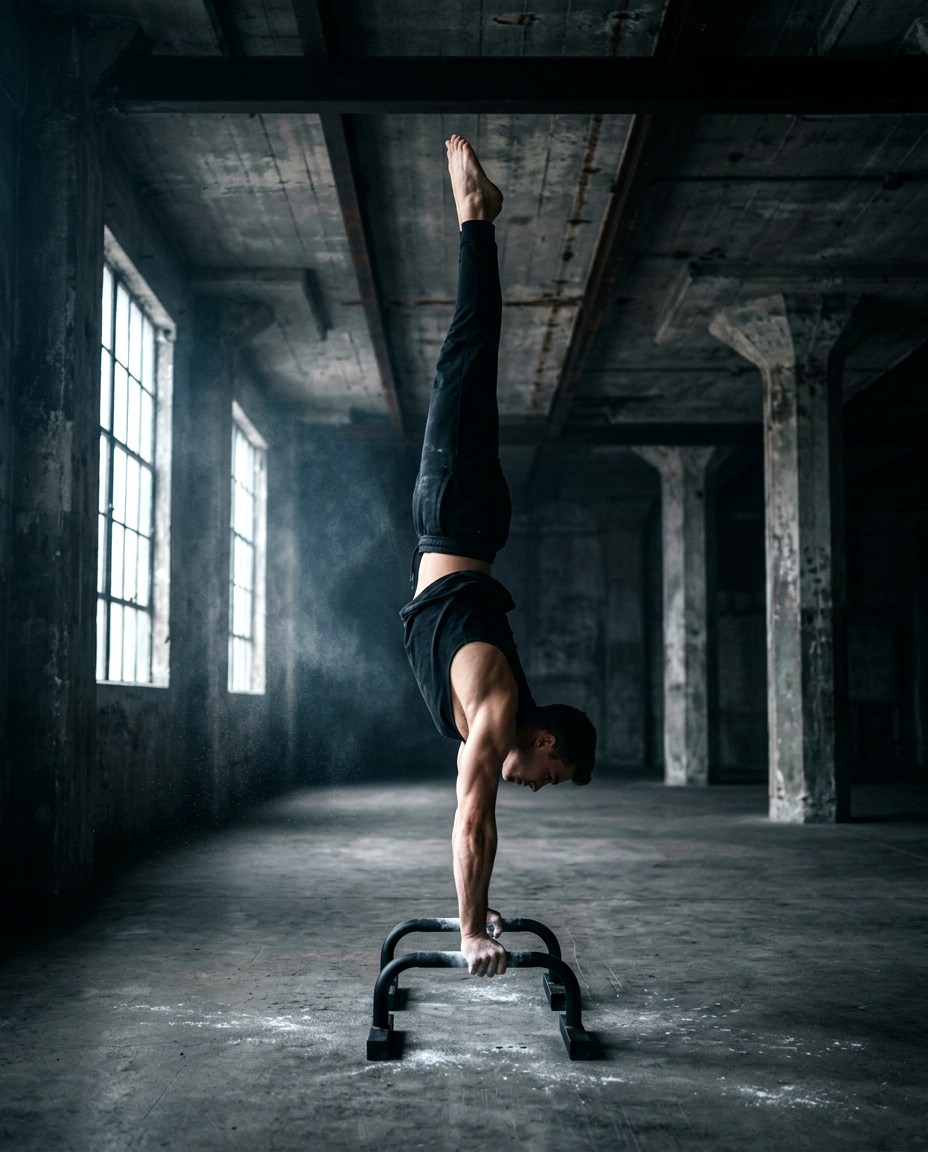
Skills in calisthenics are built on each other. Learn them out of order and you stall or get hurt; learn them in order and each one makes the next easier. Here is the order most athletes follow, and what each skill needs first.
- What Matters Most: Buy durable, competition-grade essentials that survive outdoor weather and heavy chalk instead of gimmicky gadgets.
- How to Choose: Match your lists setup to your current strength tier (Foundation, Intermediate, or Streetlifter).
- Action Plan Included: Scroll to the interactive 28-Day Bar Blueprint below for your exact Monday–Saturday schedule.
1. The dead hang
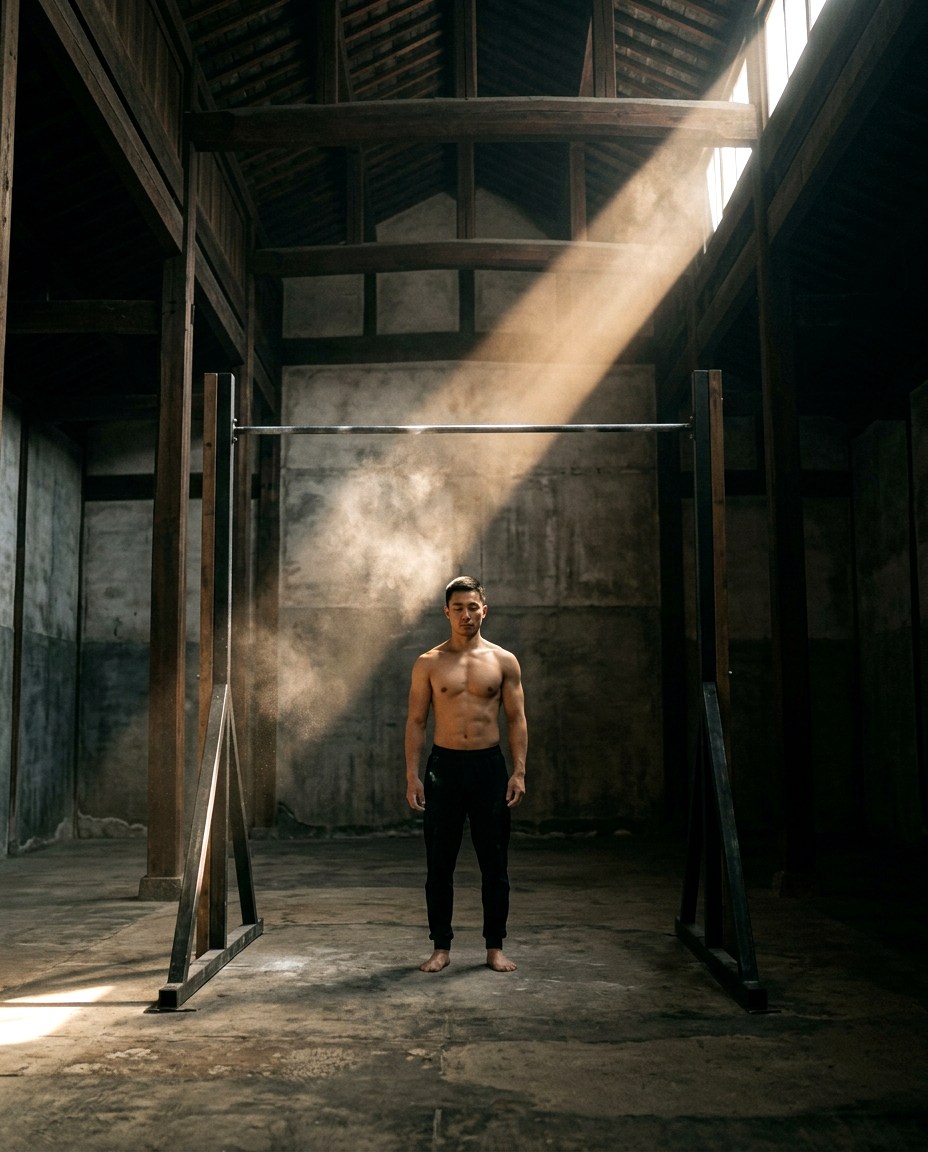
The foundation of every pulling skill: grip, open shoulders and comfort holding your own weight. Aim for 45 seconds or more.
2. The push-up
Twenty clean reps with a straight body build the pushing base for dips, handstands and the planche.
3. The hollow body hold
The shape of nearly every skill. Hold it for 30 to 60 seconds with the lower back pressed down.
4. The pull-up
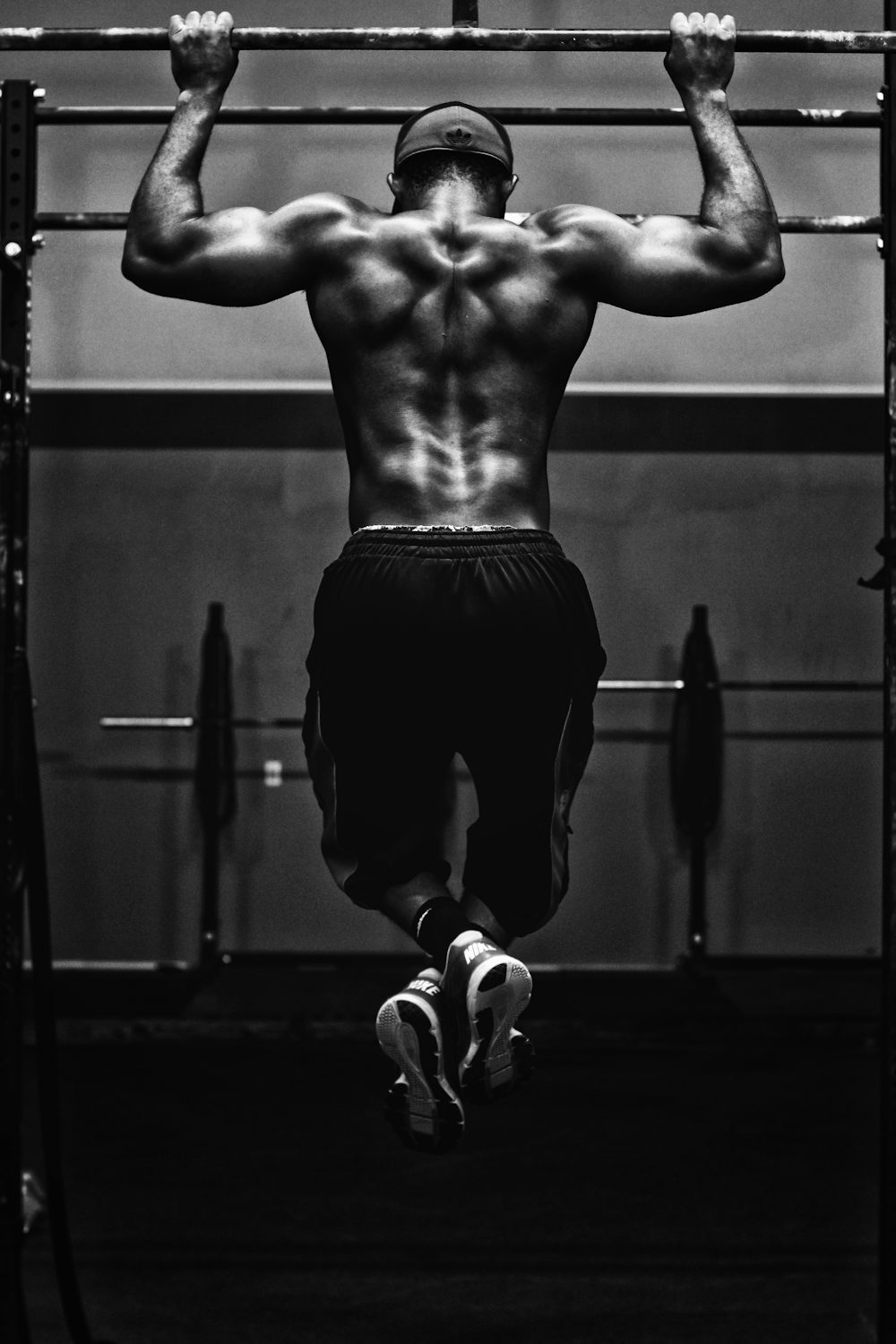
The first big milestone. Build it with scapular pulls, rows and negatives.
5. The dip
Ten to twenty full-range dips: the press-out of the muscle-up and the base of straight-arm support.
6. The L-sit
Compression and shoulder depression in one: needs dips and a hollow body first.
7. The pistol squat
Single-leg strength, balance and ankle mobility. Train it alongside the upper-body skills.
8. The muscle-up
Needs around ten strict pull-ups, chest-to-bar pulls and straight-bar dips.
9. The freestanding handstand
Built on wall holds and daily practice; the gateway to presses and handstand push-ups.
10. The back lever
Often the first static. Needs shoulder extension from German hangs and skin-the-cats.
11. The front lever
The signature pulling static: strong pull-ups, a hollow body and patient progressions.
12. The planche
The longest road: strong wrists, deep pushing strength and years of straight-arm work.
- First year — dead hang, push-up, hollow body, pull-up, dip, L-sit.
- Second year — pistol, muscle-up, handstand, first statics.
- Long road — front lever, planche, human flag and beyond.
Read the full guide for each skill in the Journal’s Guides section.
The prerequisite matrix: exact strength & mobility gates before you unlock the next skill
Every skill on this 12-step ladder has an objective entry ticket. If you try to skip a rung before you hold the ticket for the rung below it, your joints pay the tax. Use these four tier gates to verify exactly where you stand today:
Benchmark to clear: 60-second passive hang + 20-second active scapular hang, 20 chest-to-floor push-ups with a 2-second lowering tempo, and a 45-second lower-back-flat hollow body hold.
Benchmark to clear: 10 dead-hang chin-over-bar strict pull-ups, 15 below-parallel bar dips with full lockout, and a 15-second floor or parallette L-sit with knees locked.
Benchmark to clear: 5 full-depth unassisted pistol squats per leg, 3 clean bar muscle-ups with minimal kip, and a 20-second freestanding handstand in open space.
Benchmark to clear: 15-second pronated full back lever → 10-second full front lever (backed by +50% BW weighted pull-up) → 10-second straddle/full planche (backed by +60% BW weighted dip and 25s advanced tuck planche).
Stage-by-Stage Comparison: What You Need at Each Level
What works in your first three months at a local park is different from what you need when you are hanging two 20 kg plates from a dip belt or working toward a full front lever. Cheap chrome bars get slick in summer humidity, thin bands lose tension after a season in a backpack, and tight sleeves restrict your shoulders as soon as you reach overhead. Use the comparison table below to match 12 Calisthenics Skills to Learn, in Order to your current level:
| Athlete Stage | Main Focus at the Bar | What to Look For | Mistake to Avoid | Recommended AGC Kit |
|---|---|---|---|---|
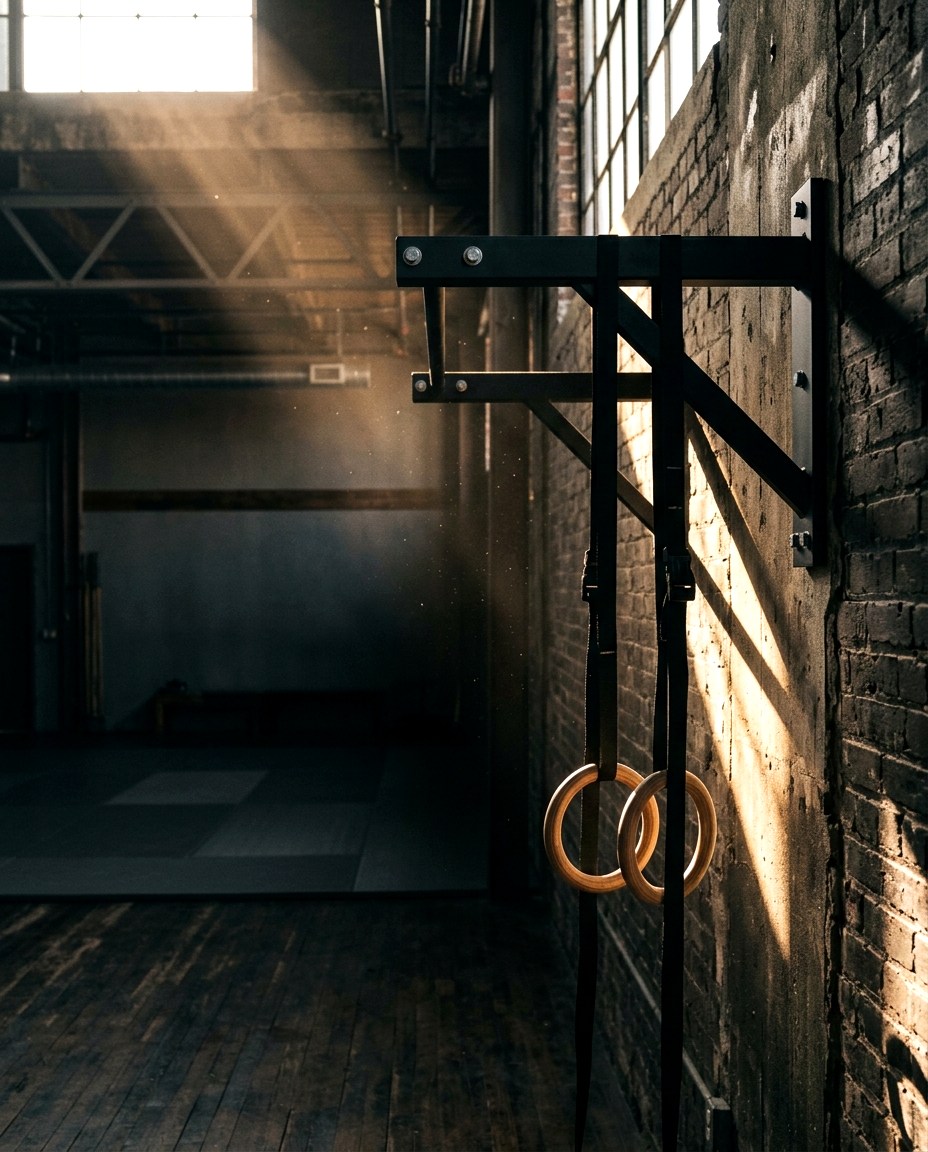
| Beginner (Months 0–6) 0–8 Pull-Ups · Learning Form | Building grip endurance, active shoulders, and 3-second lowering control (3–4 days/week) | 28–32 mm grip bar, 28 mm birch wooden rings, liquid chalk, and a training logbook | Buying workout gloves or gimmicks instead of building real calluses and shoulder control | Anti Grav Cut-off ($39.99) + Sorona Classic Tee ($25.94) |
| Intermediate (Months 6–24) 10–15 Pull-Ups · First Muscle-Up & Tuck Holds | Adding small weights (+5–25 kg), bridging leverage gaps, and 15 min handstands | Contoured dip belt, 40 mm wooden parallettes, and cloth twist-lock wrist wraps | Jumping to full levers/planche before your elbow tendons have adapted | Anti Grav Cut-off ($39.99) + Oversized OG Crewneck ($39.94) |
| Advanced & Streetlifter (Years 2+) +35–75 kg Pull-Up · Full Statics & Meets | 4-week wave blocks, strict competition depth, and year-round joint health | ISF-legal non-elastic dip belt strap, 0.5 kg micro-plates, and side-angle phone tripod | Maxing out to sloppy failure every workout instead of stacking crisp sets | Fleece Zip-Up Boxy Hoodie ($61.94) + Anti Grav Cut-off |
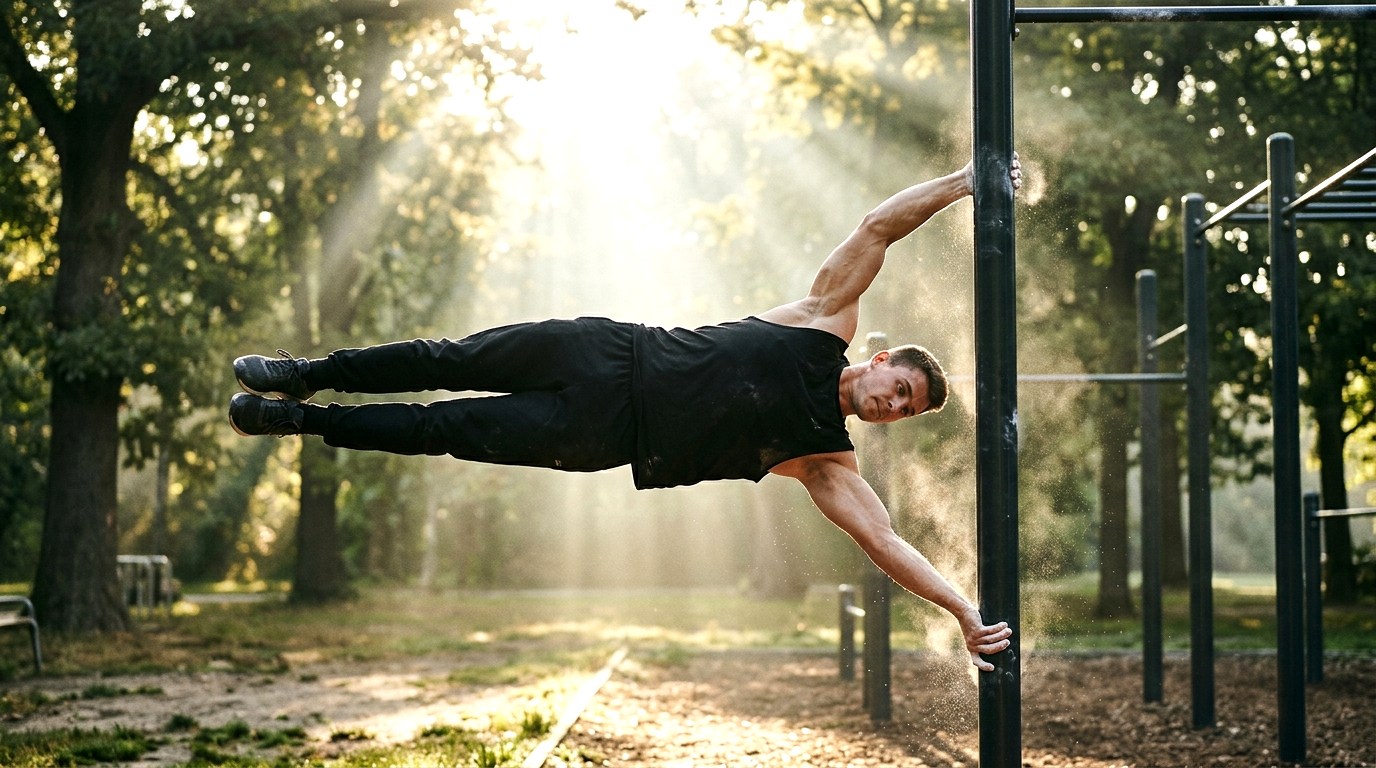
From Cold Park Warm-Ups to Platform Top Sets
Built for athletes who move their own bodyweight: pair our Fleece Zip-Up Boxy Hoodie ($61.94) and Unisex Oversized OG Crewneck ($39.94) with the raw-edge Anti Grav Cut-Off ($39.99).
The 28-Day Bar Blueprint: Step-by-Step 4-Week Training Plan
Reading about biomechanics won’t build a single rep unless you bring a clear plan to the bar. Below is your complete, easy-to-follow 4-Week Training Blueprint for 12 Calisthenics Skills to Learn, in Order. First, click through Weeks 1 to 4 to see how your effort and reps change each week; then follow the 4 Weekly Workout Cards (Monday, Wednesday, Friday, Saturday) below.
How to Progress Across All 4 Weeks
Pick a progression or weight where every single rep looks textbook. Lower yourself for a full 3-second count and pause 1 second at the bottom.
Film your first and last set from the side at waist height so you have a Day 1 video to compare against Day 28.
Smooth & Controlled: Finish every set feeling like you could have done 3 more clean reps.
Keep the exact same exercise variation or weight as Week 1. Do not rush to a harder variation yet—earn more volume with identical form.
Rest a full 3 minutes between main sets so your last set is just as crisp as your first.
Solid Work: Finish each set with 2 clean reps left in the tank. Zero form breakdown.
Now that your joints and nervous system are grooved, increase the challenge slightly on your first 2 top sets while keeping strict lockout.
Prioritize 8 hours of sleep and high protein (1.6–2.0 g/kg bodyweight) to recover from peak week.
High Tension: Stop 1 rep short of failure. Never grind through elbow or shoulder pain.
Cut your sets by 50% on Monday and Wednesday so fatigue clears and your tendons supercompensate. Take Thursday and Friday off.
On Saturday (Day 28), warm up for 15 minutes and film your new Personal Best from the exact same angle as Day 1.
Fresh & Explosive: Easy sessions Mon/Wed so you feel weightless on Saturday’s test.
Exact Day-by-Day Session Cards
Upper-Body Strength & Skill
Wrist circles, 30s passive hang & 10 active scapular pulls
Handstand balance against wall/freestanding or L-Sit holds
Strict Pull-Ups paired with Parallel-Bar Dips (Rest 90s between moves)
Hollow Body Hold (lower back pressed flat) + Arch Hold
Legs, Core & Mobility
Deep resting squat hold (2 min) + Cossack lunges
Assisted Pistol Squats, Shrimp Squats, or Deep Split Squats
Nordic Hamstring Lowerings or Single-Leg Hip Thrusts
Pancake straddle fold + Pike compression leg lifts
Horizontal Control & Volume
Band shoulder dislocates, wrist rocks & 10 slow push-ups
Tuck Front Lever or Planche Lean with locked elbows
Bodyweight Ring/Bar Rows paired with Diamond or Pseudo-Planche Push-Ups
Two-Arm Dead Hang + 15 Band Face Pulls
Flow, Density & Prehab
5 Pull-Ups + 8 Dips + 10 Squats + 15s L-Sit (Rest 90s per round)
Crow pose, handstand balance, or bar flow transitions
Light wrist curls, reverse wrist curls & finger extensions
Relaxed dead hang and deep nasal breathing
Frequently Asked Questions
How many days per week should I run this 12 Calisthenics Skills to Learn, in Order blueprint?
Four sessions per week (Monday, Wednesday, Friday, Saturday) gives you the ideal balance of practice frequency and tendon recovery. If your schedule is tight, perform Monday, Wednesday, and Friday (3 days/week) and keep Tuesday, Thursday, and weekends as active rest.
What if an exercise in the workout card is too hard or too easy for my current level?
Adjust the leverage, not the form. If you cannot hit the minimum reps with locked elbows and a smooth 3-second lowering phase, step back one variation (for example, move from Advanced Tuck to Tuck, or reduce dip-belt weight by 5 kg). If you hit the top of the rep range easily on all sets in Week 3, advance to the next variation in your next 4-week block.
Why do we cut sets in half during Week 4 instead of pushing harder?
Muscles recover in 48 to 72 hours, but tendons and elbow/shoulder connective tissues need every fourth week at lighter volume to finish laying down new collagen fibres (Kjaer et al., 2009; Bohm et al., 2015). Week 4 is where your body locks in the strength you built in Weeks 1–3.
What gear do I actually need in my bag for this 4-week block?
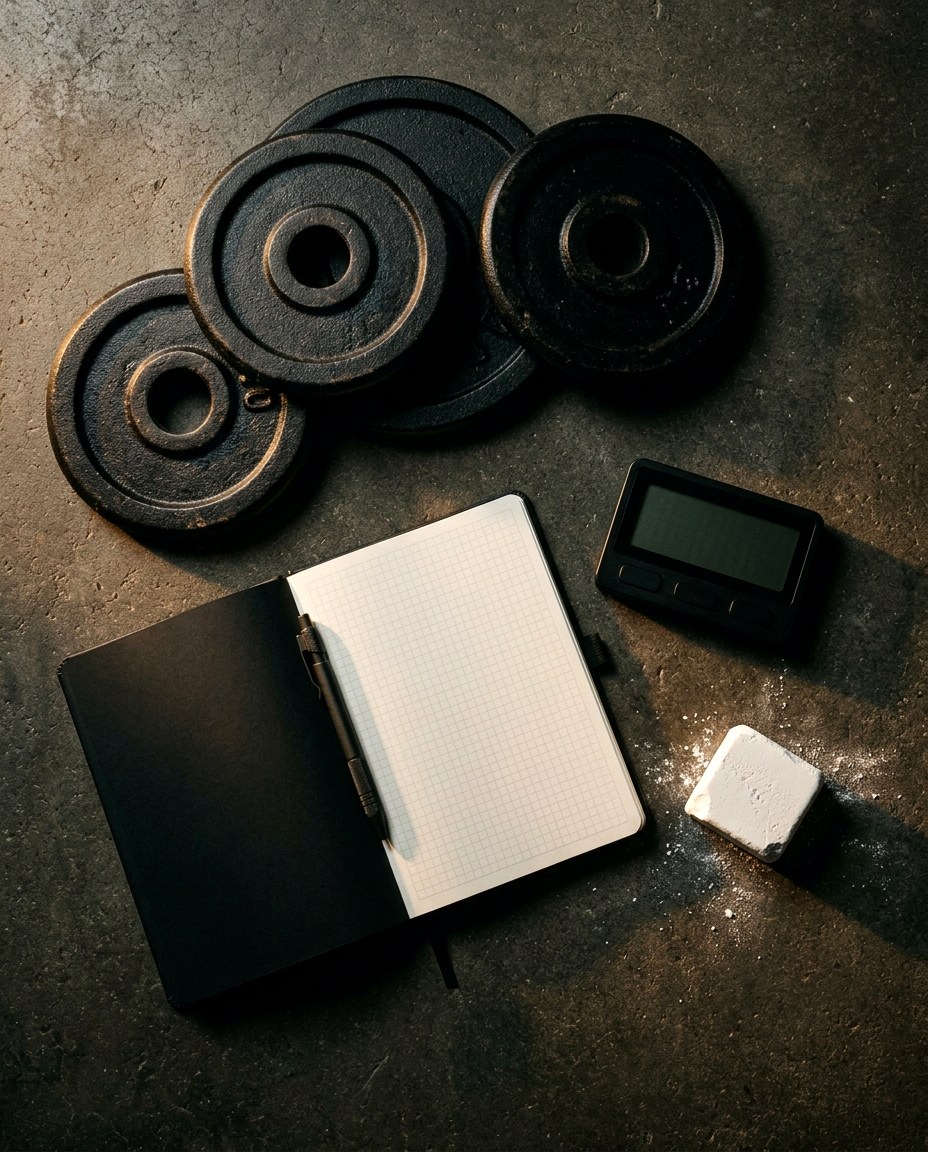
Keep it simple: liquid or block chalk for grip security, a notebook or phone timer to track your sets and 3-minute rests, wooden rings or parallettes if floor work bothers your wrists, and an unrestricted top like the Anti Grav Cut-off ($39.99) paired with a warm layer like the Fleece Zip-Up Boxy Hoodie ($61.94).
Train in the club’s colours. Anti Gravity Club makes training apparel for people who move their own bodyweight. Shop the club

Leave a Reply